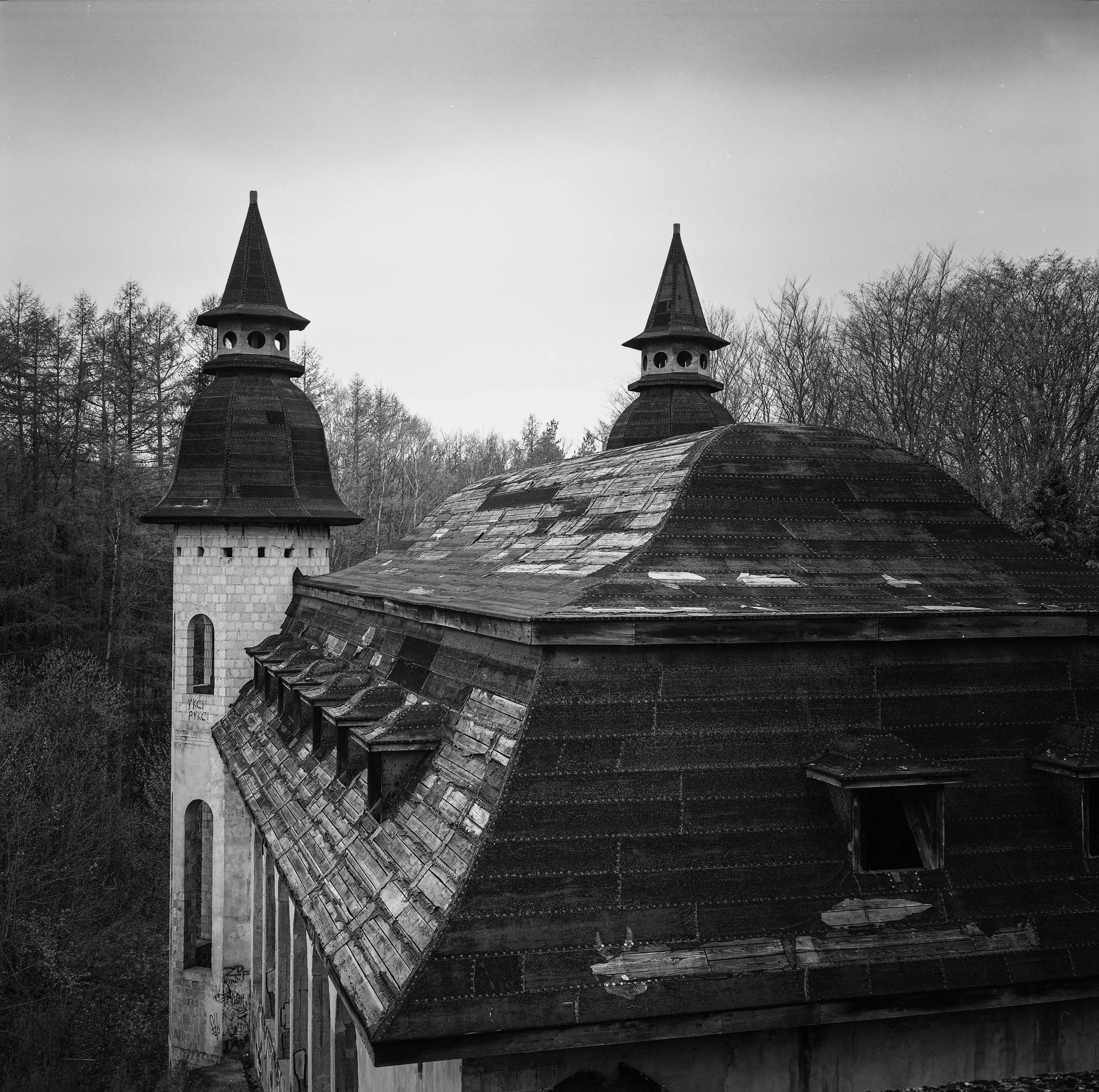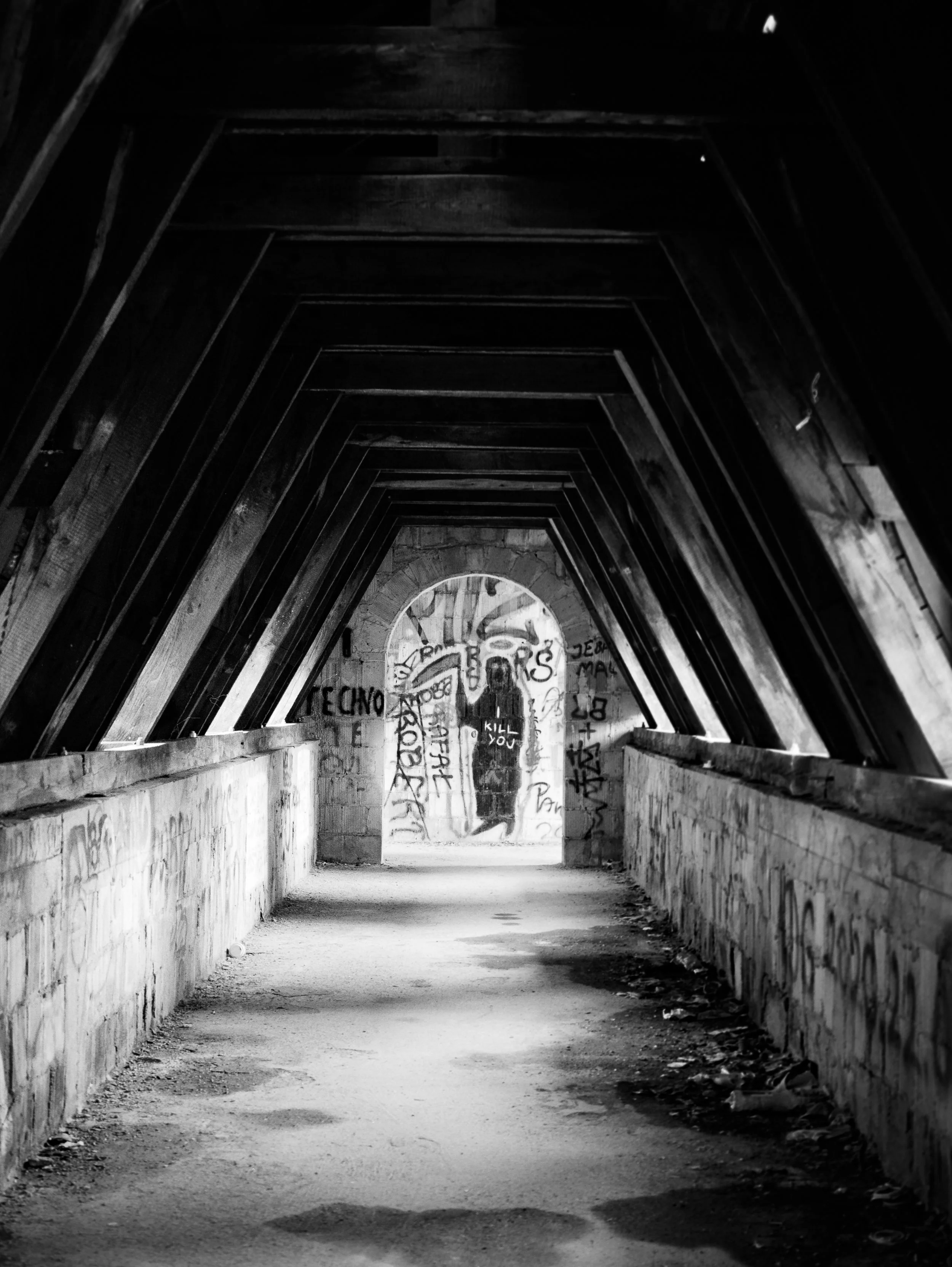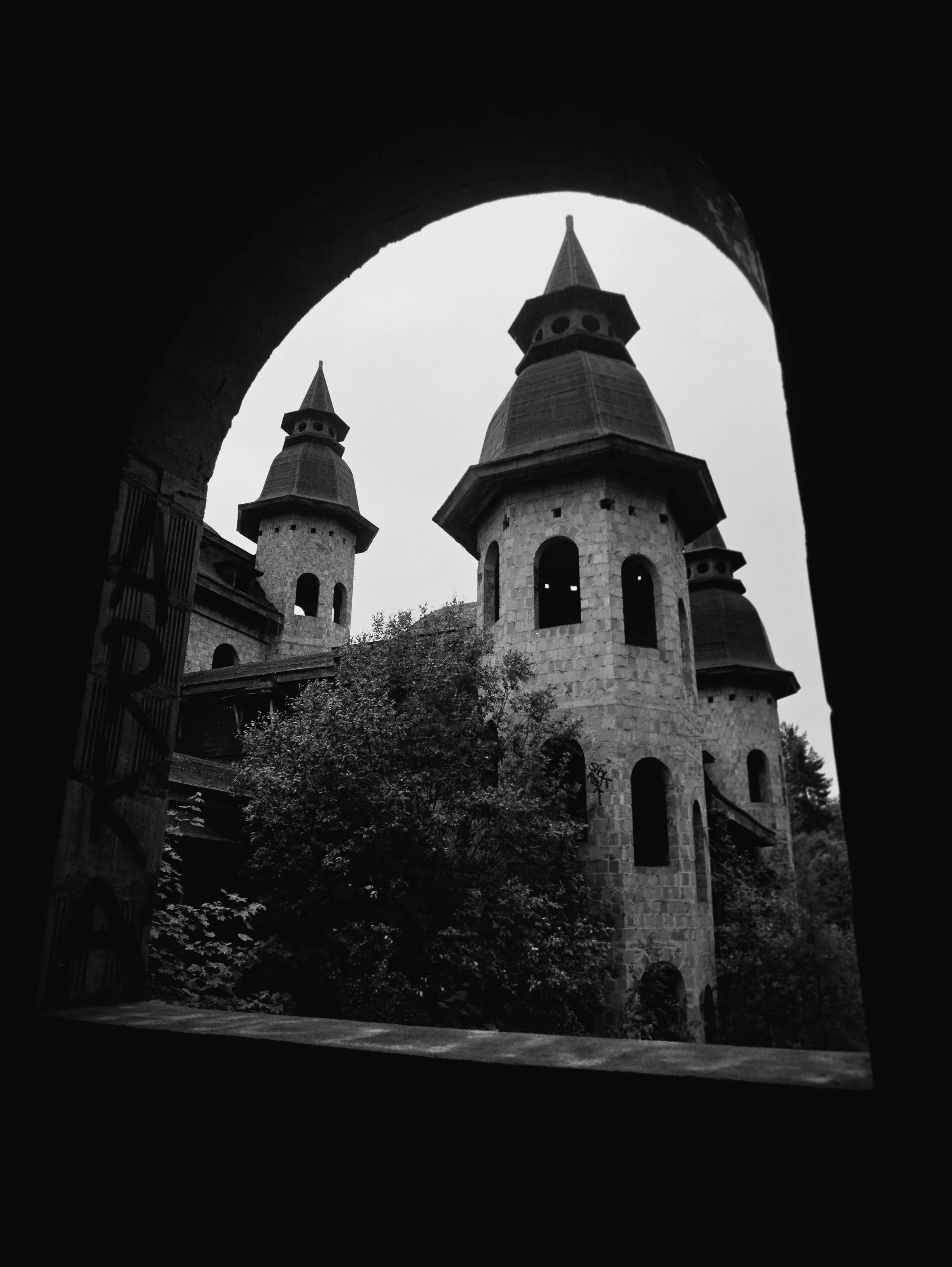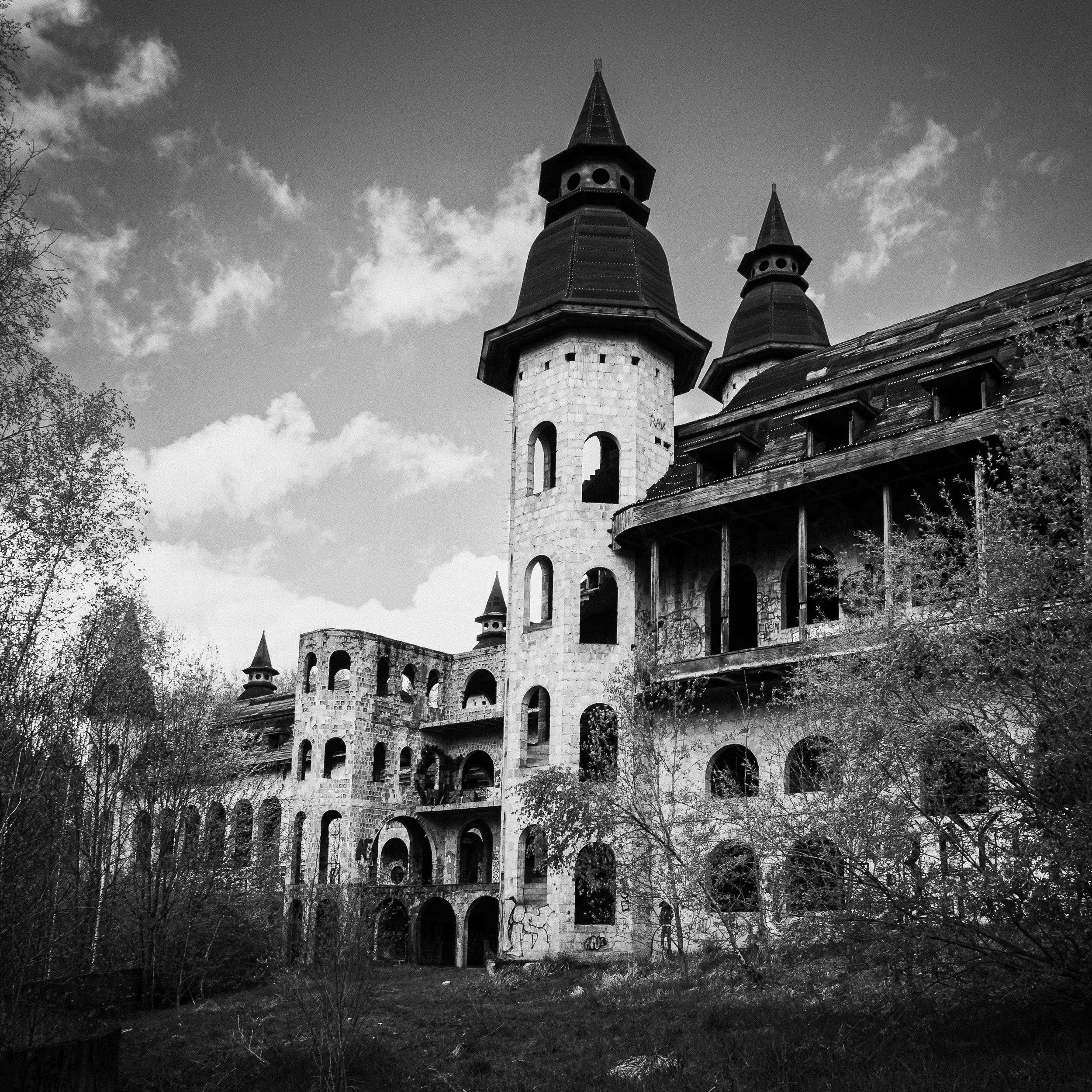
In the Kashubian region of northern Poland, approximately 40 kilometers from the Tri-City area and near Lake Rekowo, stands a structure that appears older than it is—and more complete than it ever became. Known as Zamek Łapalice, it resembles a fortified castle, yet it is neither historic nor finished. It is a modern construction, begun in the early 1980s and abandoned before its vision could be realized.
Text & Photo: Bjørn Joachimsen • bjorn.joachimsen@gmail.com
The project was initiated by Piotr Kazimierczak, a sculptor and furniture manufacturer from Gdańsk. In 1983, he received permission to build a modest private residence with a studio of around 170 square meters. Instead, the project expanded into a six-storey complex of approximately 5,000 square meters.
What emerged was an architectural system shaped by symbolic ambition: 52 rooms corresponding to the weeks of the year, 365 windows reflecting the days, and twelve towers—interpreted as references to the apostles or the months. The design included a ballroom, a swimming pool, terraces, and richly crafted wooden interiors intended to be executed largely by the owner himself.
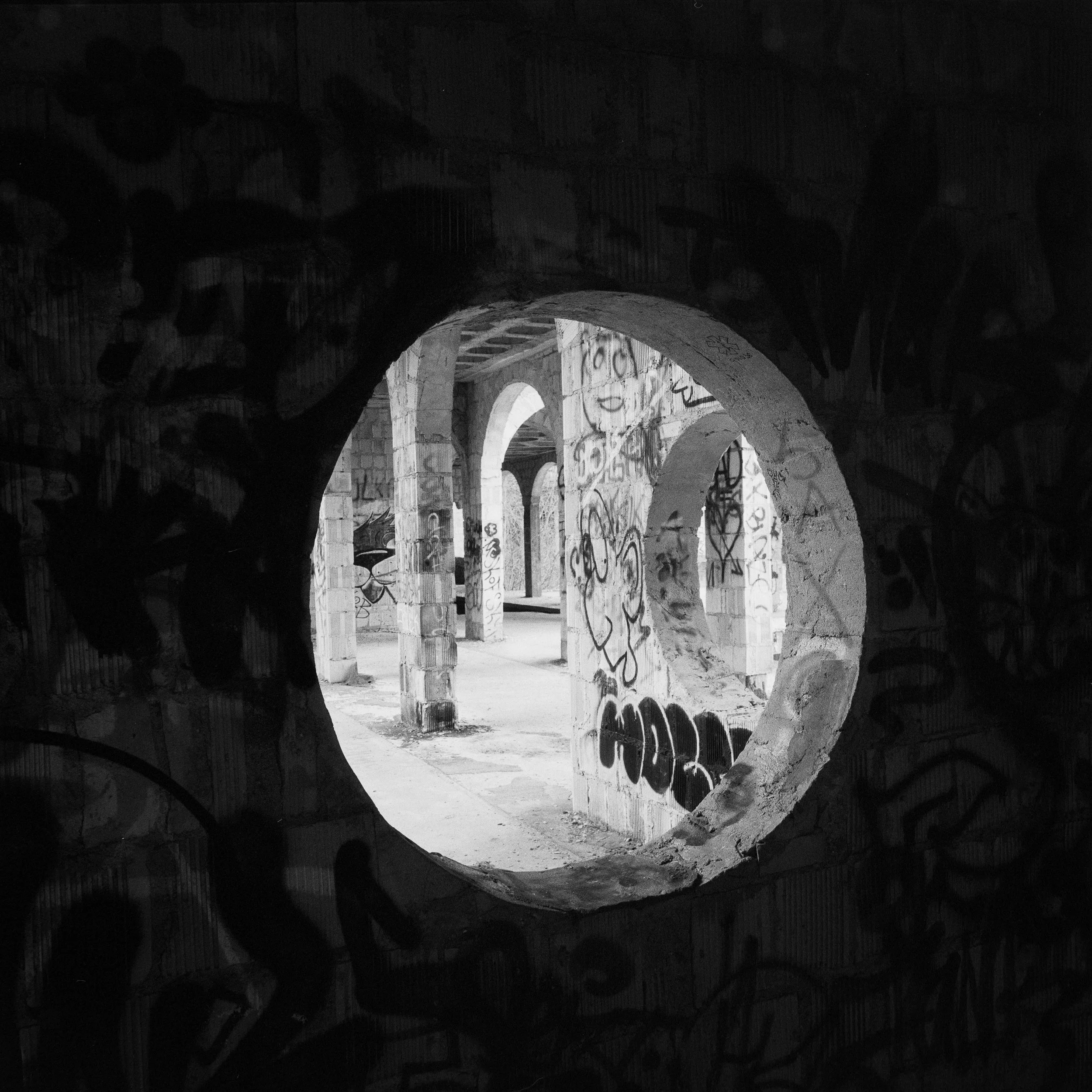
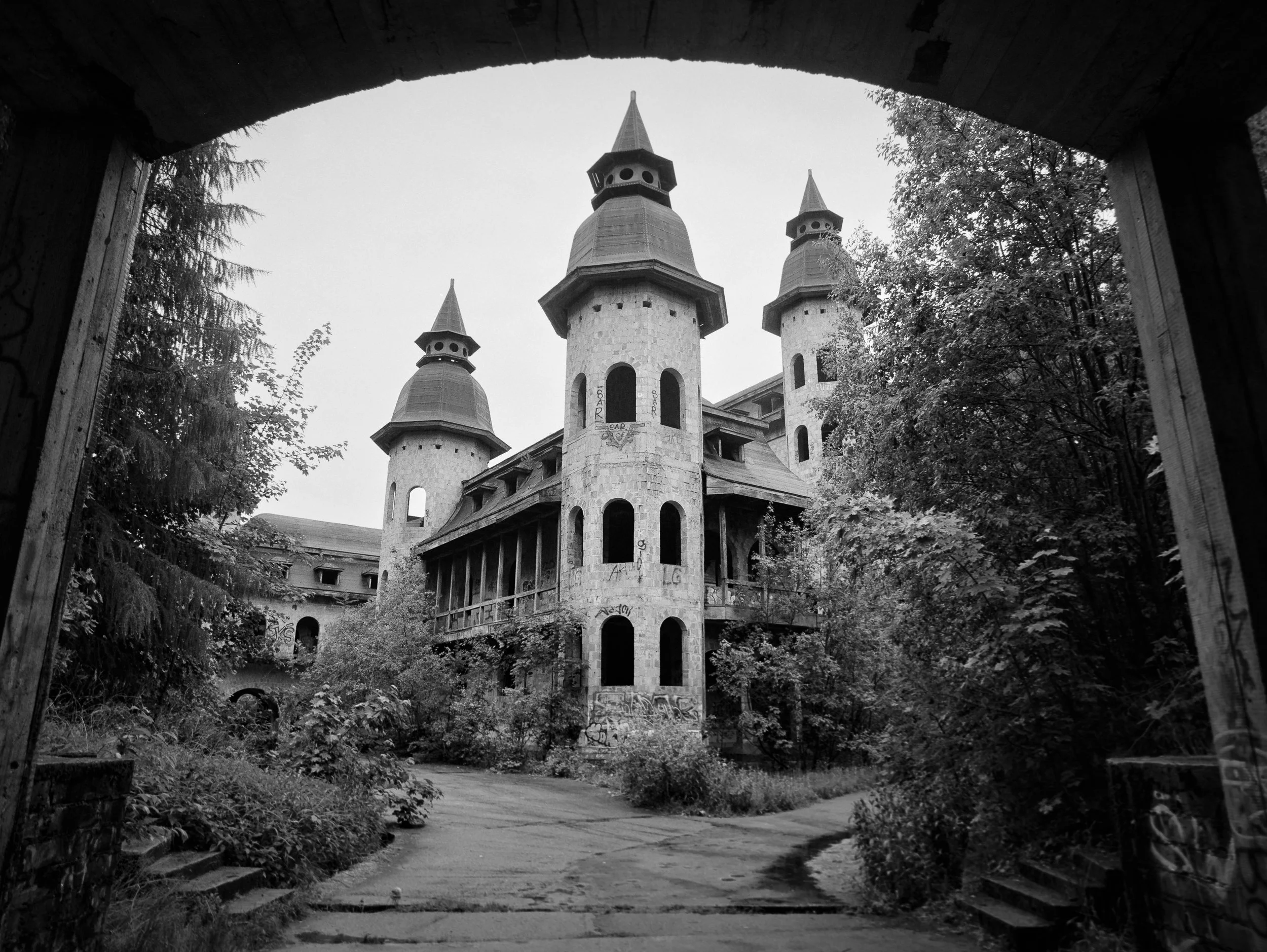
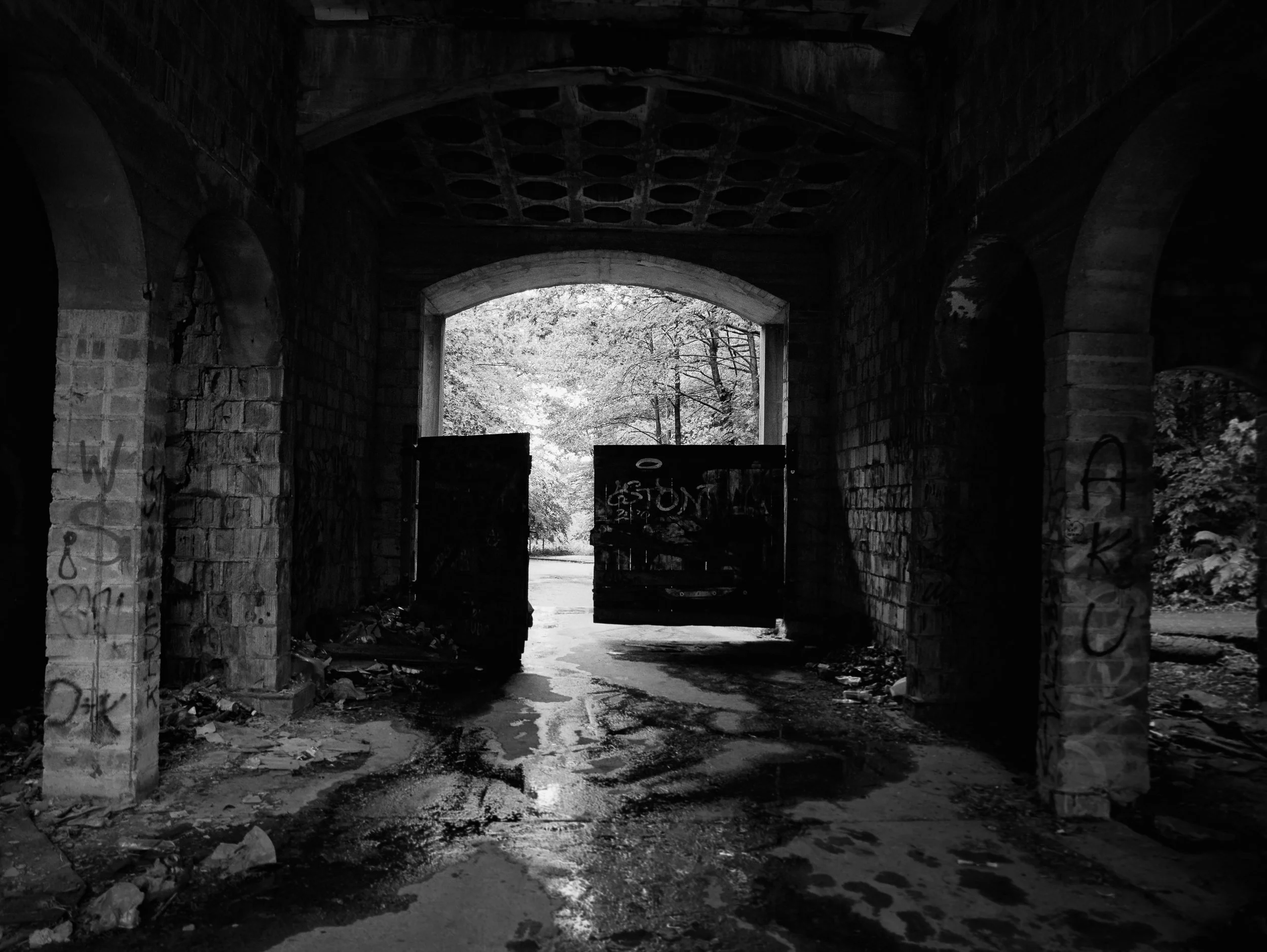
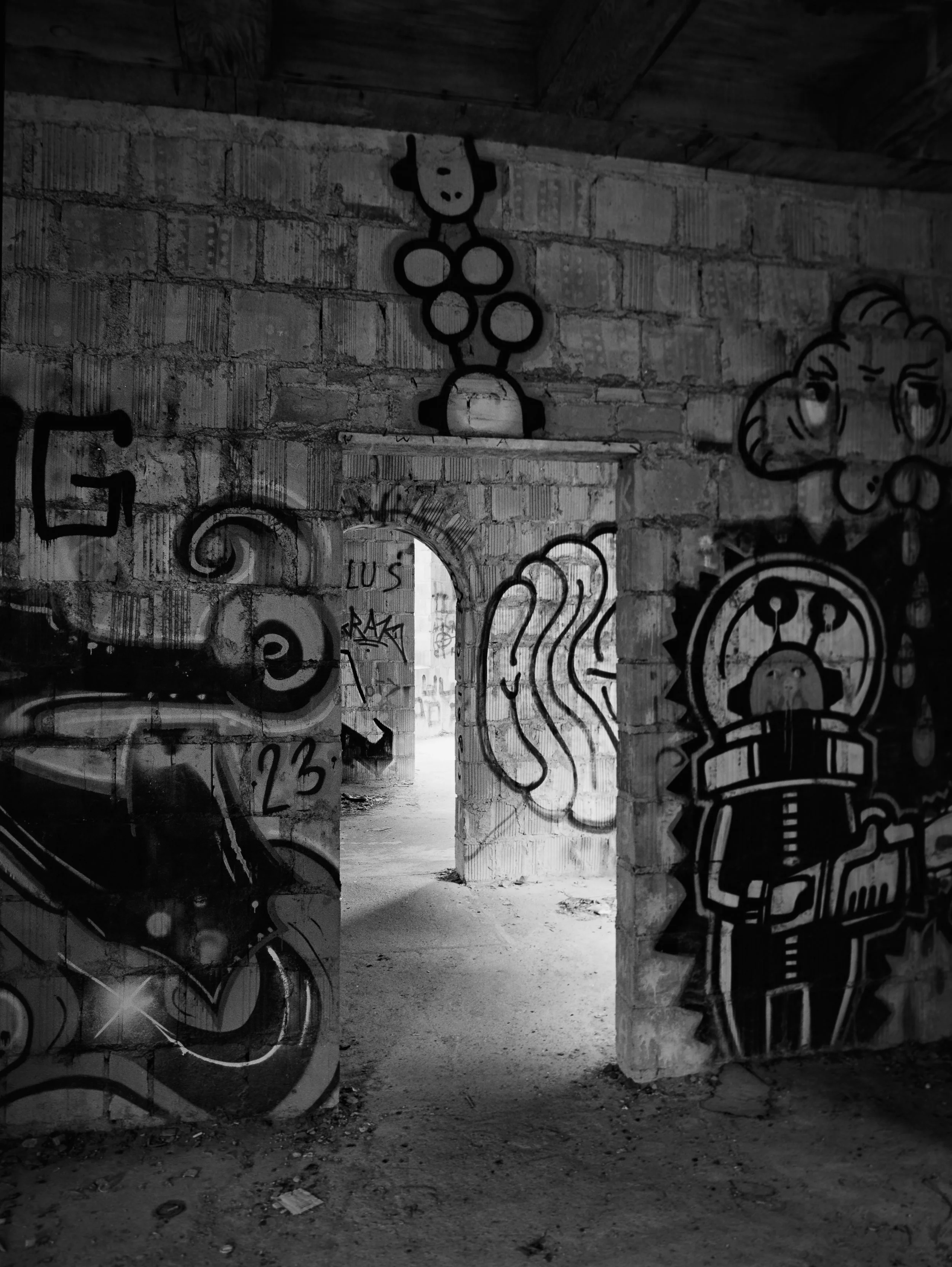
A structure suspended between construction and decay, resisting both use and collapse. Photo: Bjørn Joachimsen.
Financed through a successful furniture business, the project grew rapidly—but beyond both financial sustainability and legal compliance. By the early 1990s, construction was halted. What followed was a prolonged legal struggle, including demolition orders, appeals, and administrative reversals. In 2013, a formal ban on further construction froze the project. A 2023 spatial plan has since reopened the possibility of completion, though its future remains uncertain.
Between Illegality and Vision
Zamek Łapalice is frequently described as an unauthorized construction. Yet this classification alone fails to capture the intent behind it. For Kazimierczak, the castle was conceived as a lifetime work—an environment where architecture and sculpture would merge into a unified artistic statement.
His vision extended beyond structure: interiors crafted by hand, incorporating sculptural elements in walls, ceilings, and floors. A total work of art. But such ambition required time, resources, and continuity—none of which could be sustained.
The result is not failure in a conventional sense, but interruption.
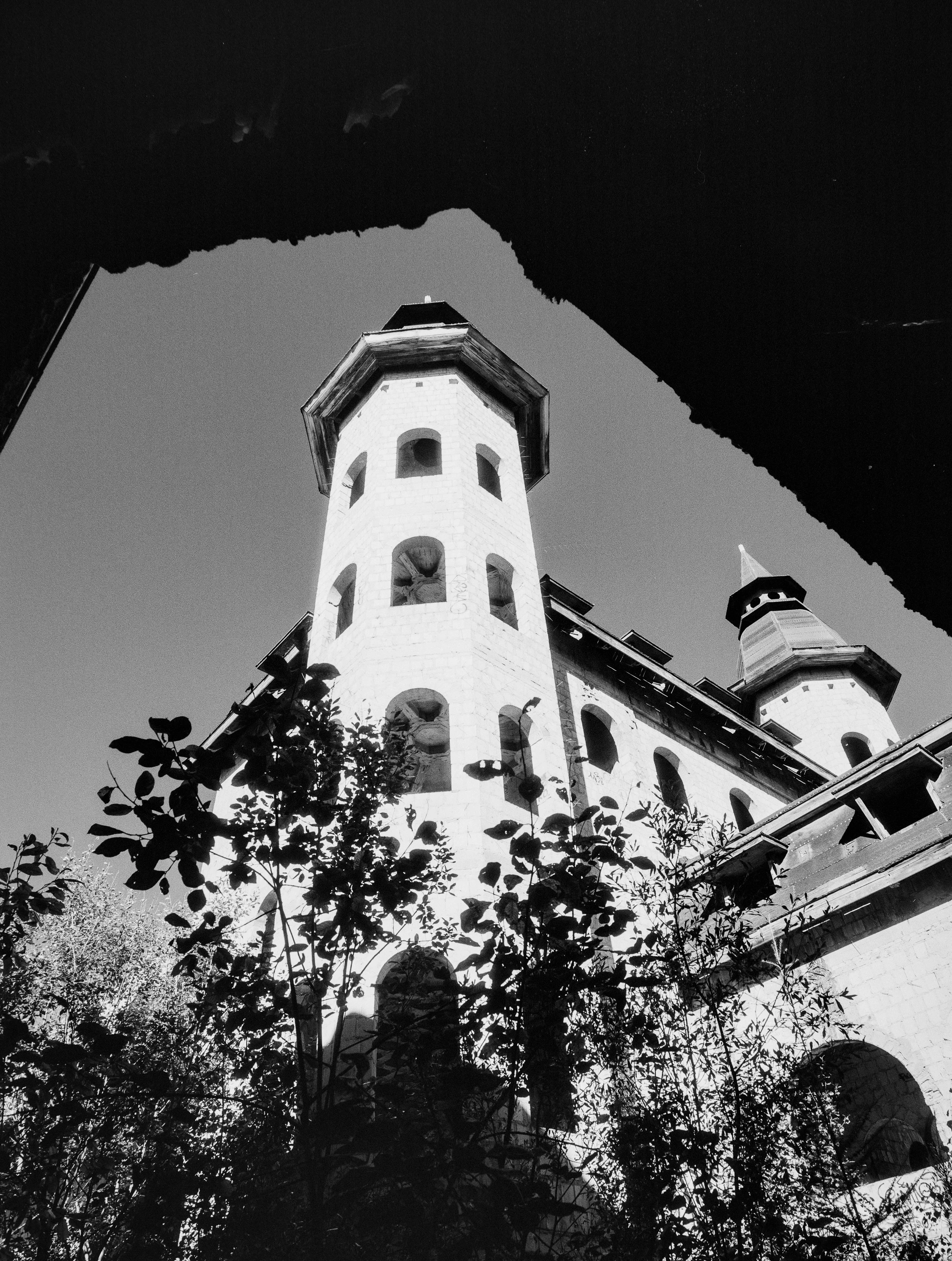
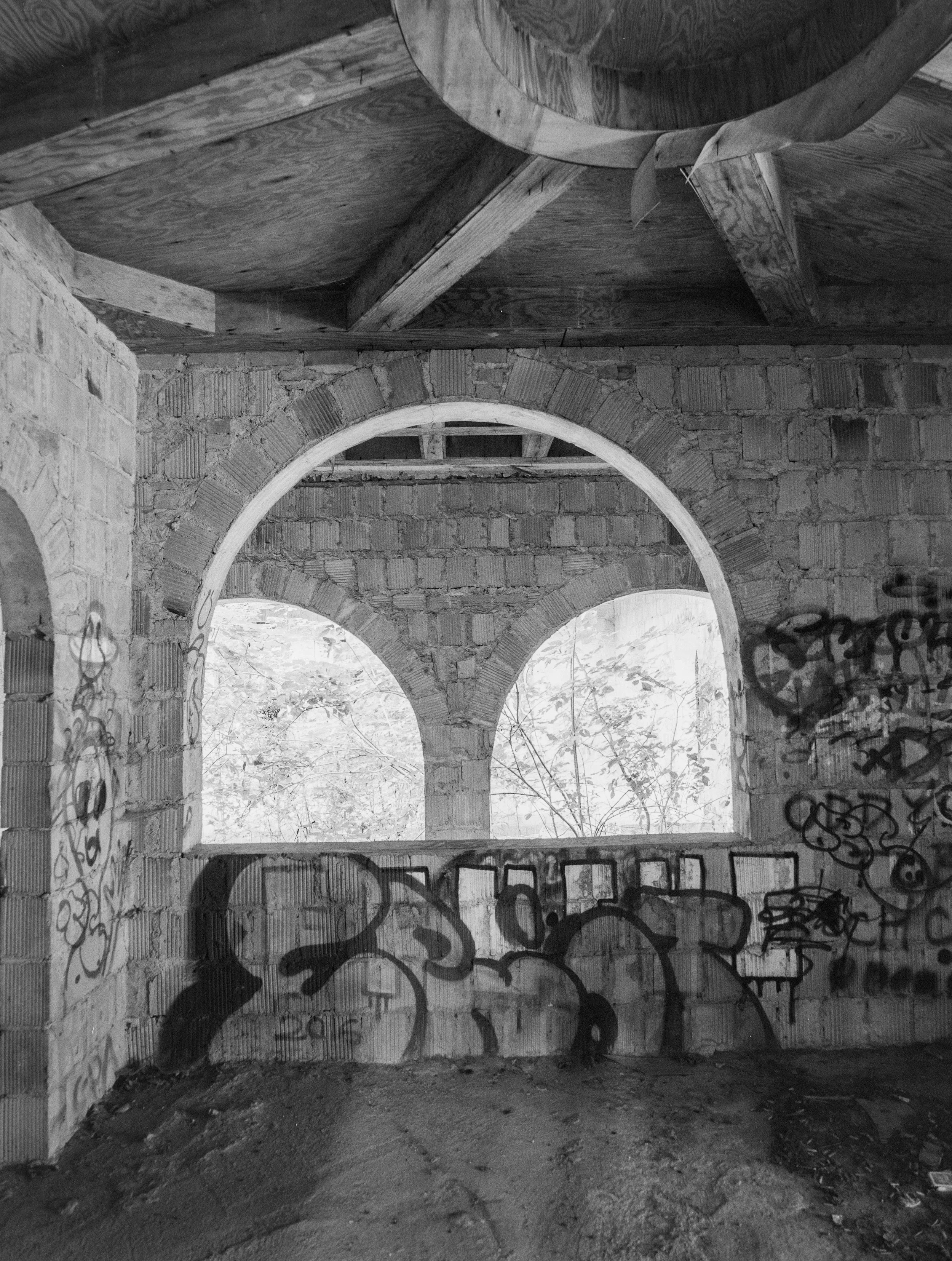
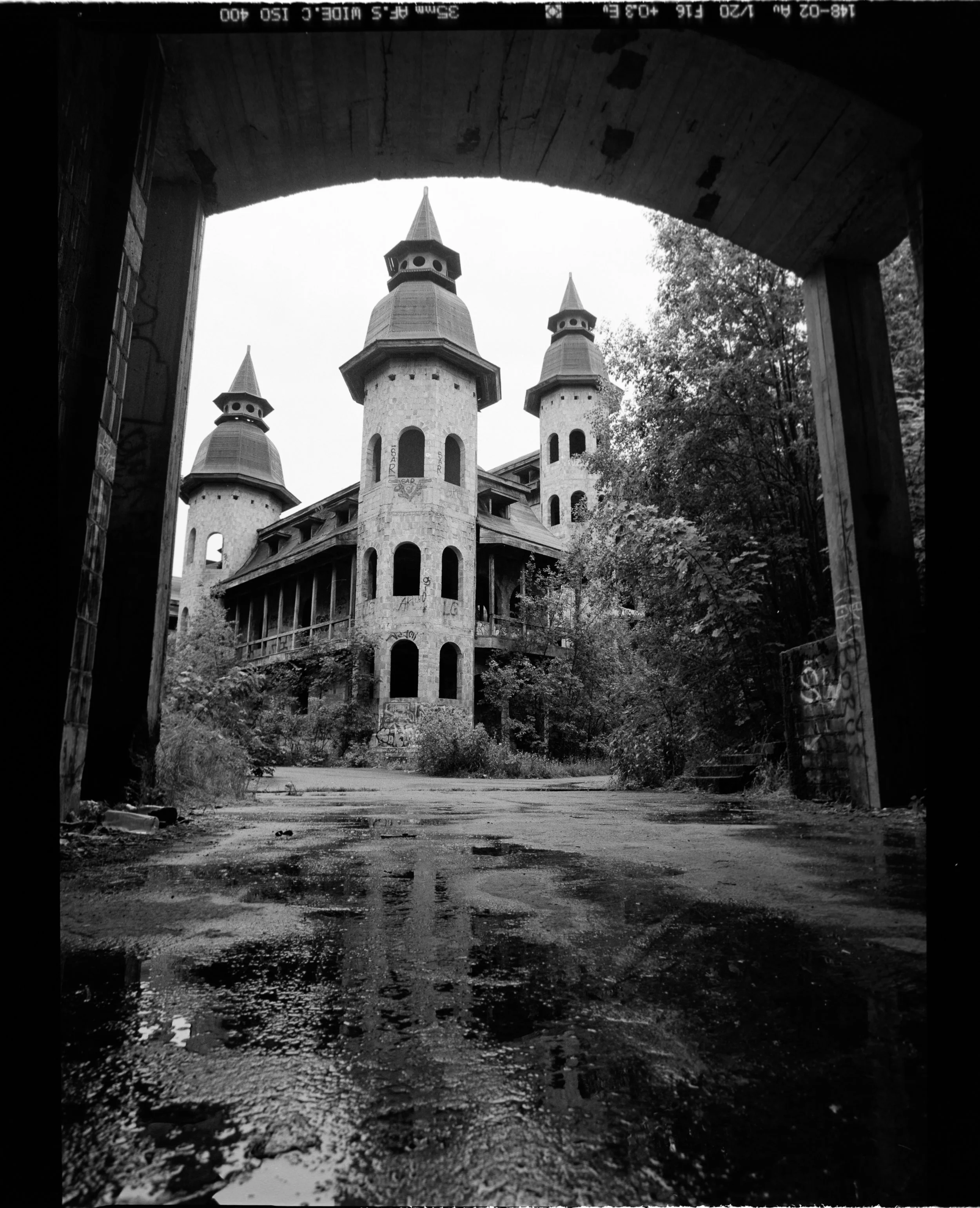
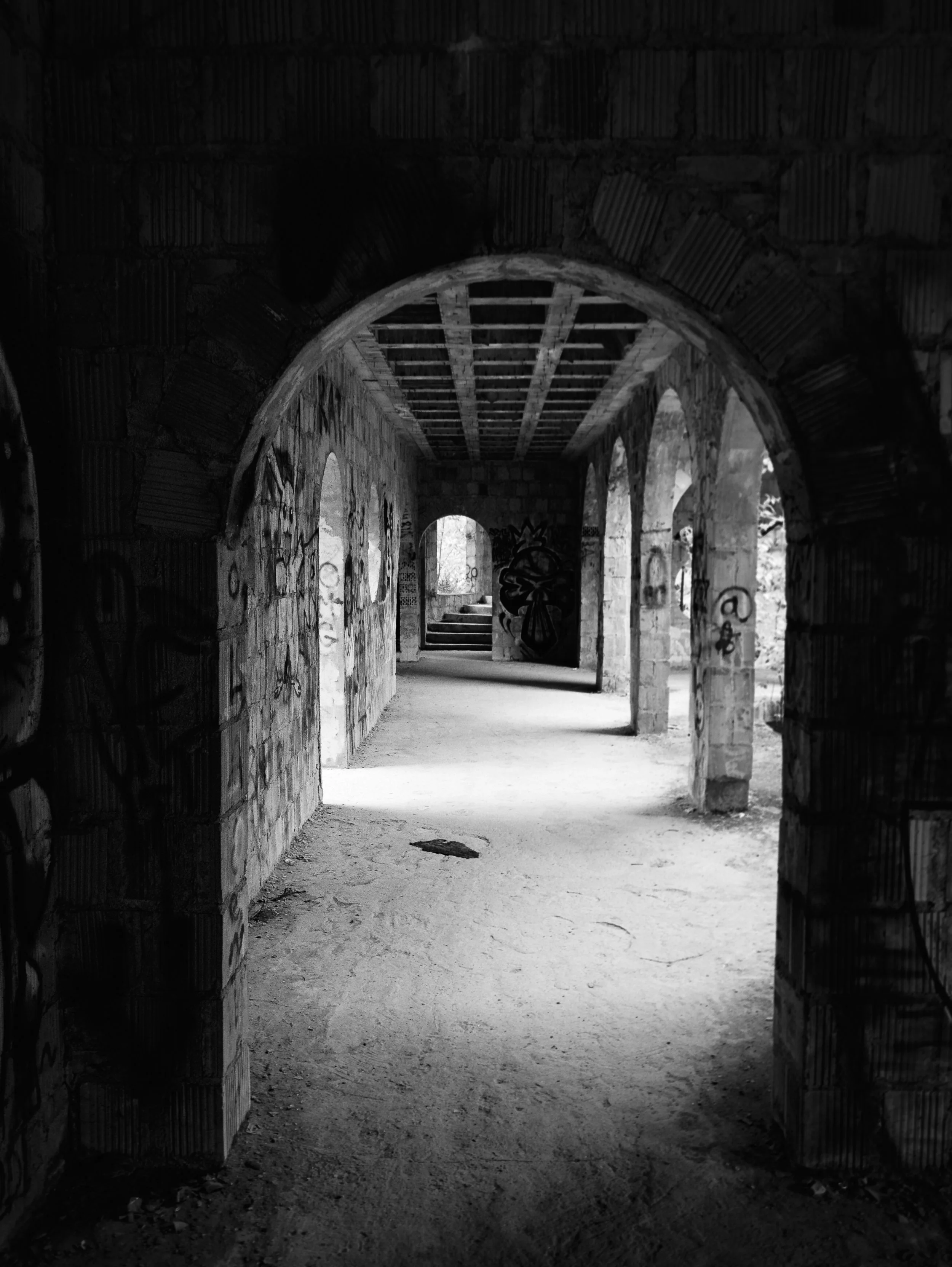
Raw concrete surfaces reveal the building’s halted process, frozen between intention and execution. Photo: Bjørn Joachimsen.
A Living Ruin
Over time, the unfinished structure has taken on a life of its own. Despite being officially closed and marked as private property, it attracts large numbers of visitors—sometimes hundreds in a single day.
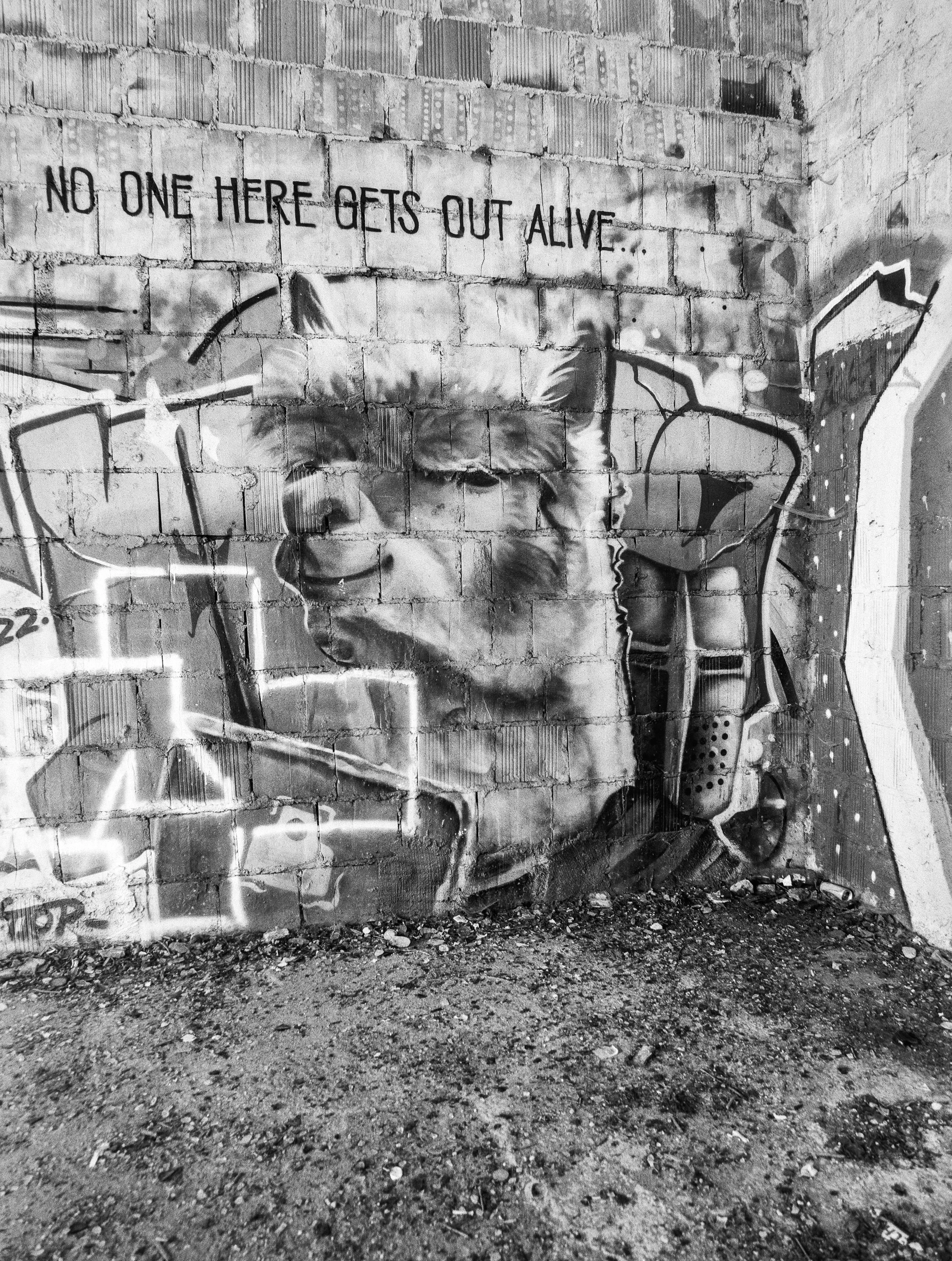
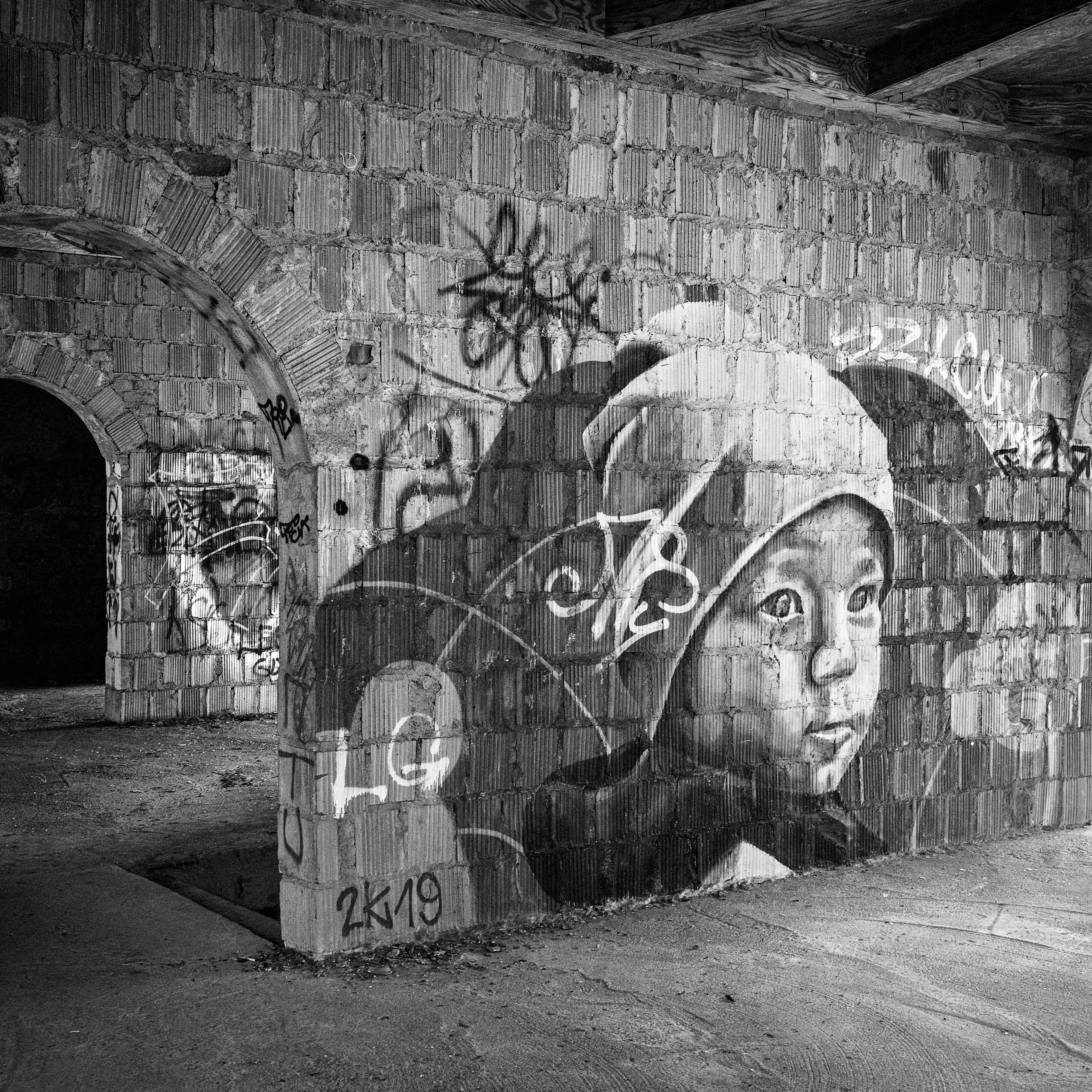
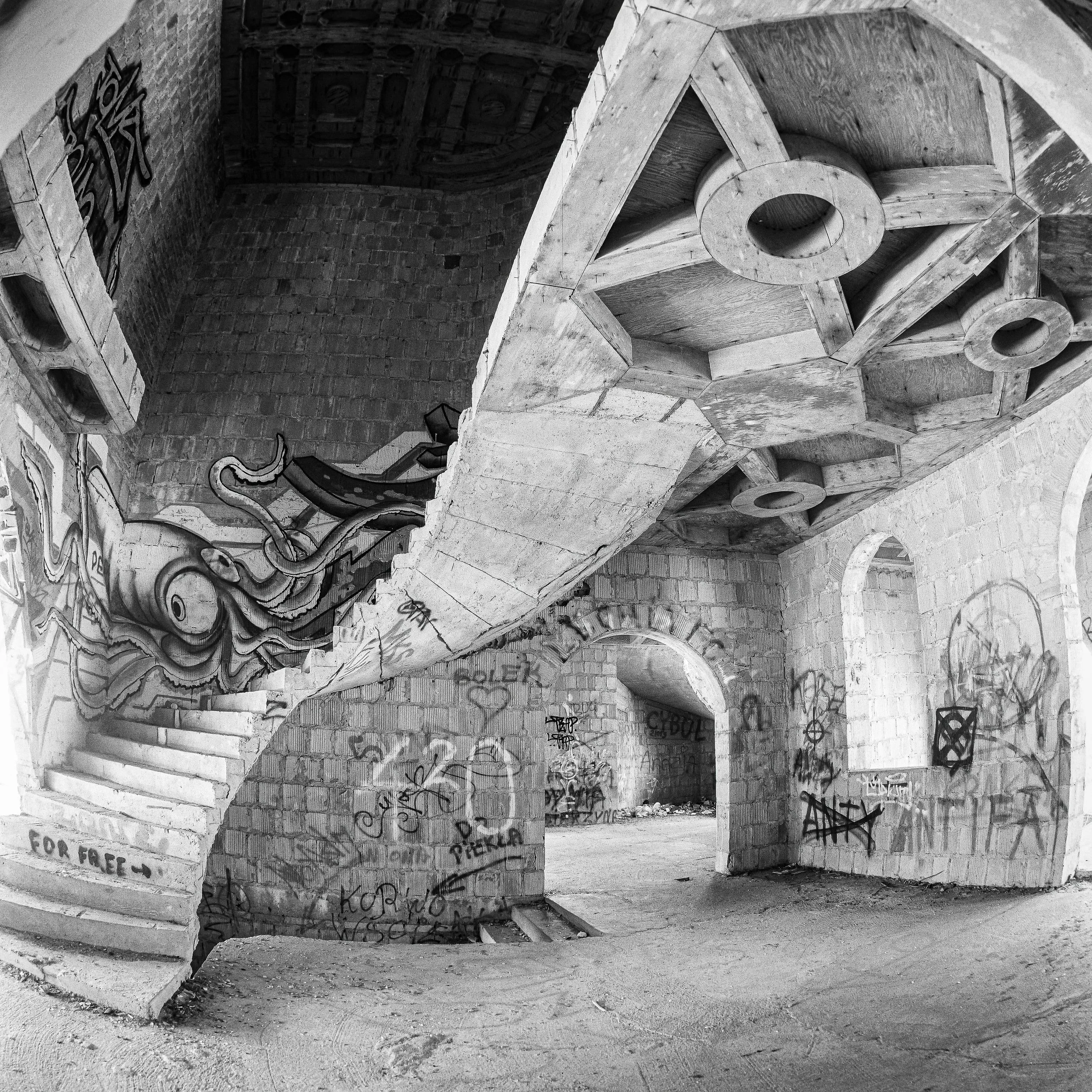
Yet the on-site reality diverges sharply from its photographic image. Visitors often encounter not a romantic ruin, but a deteriorating and neglected space—littered, damaged, and marked by uncontrolled human presence. Graffiti covers surfaces. Broken glass and debris are common. The atmosphere has been compared less to heritage architecture and more to a setting suitable for horror cinema.
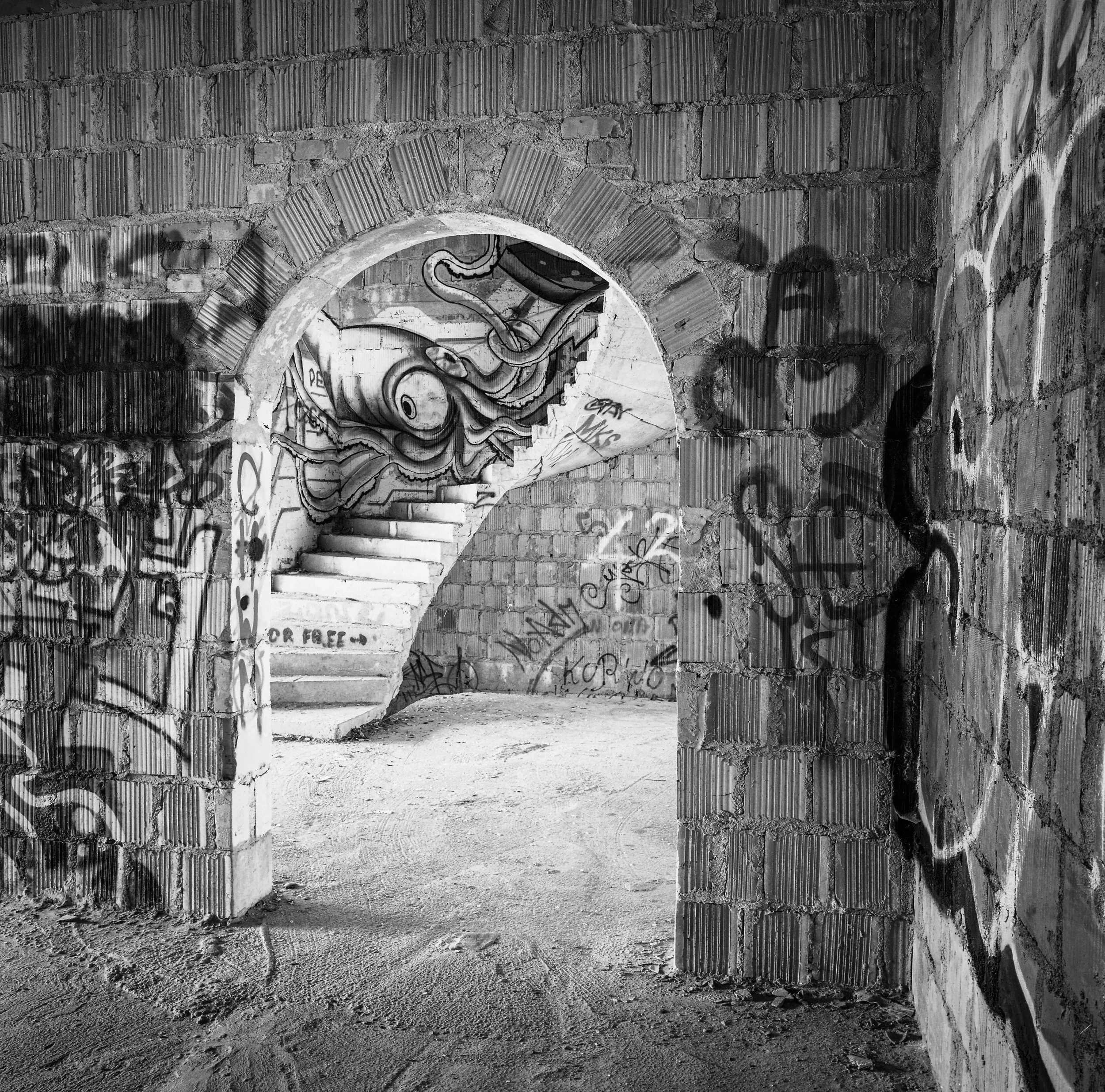
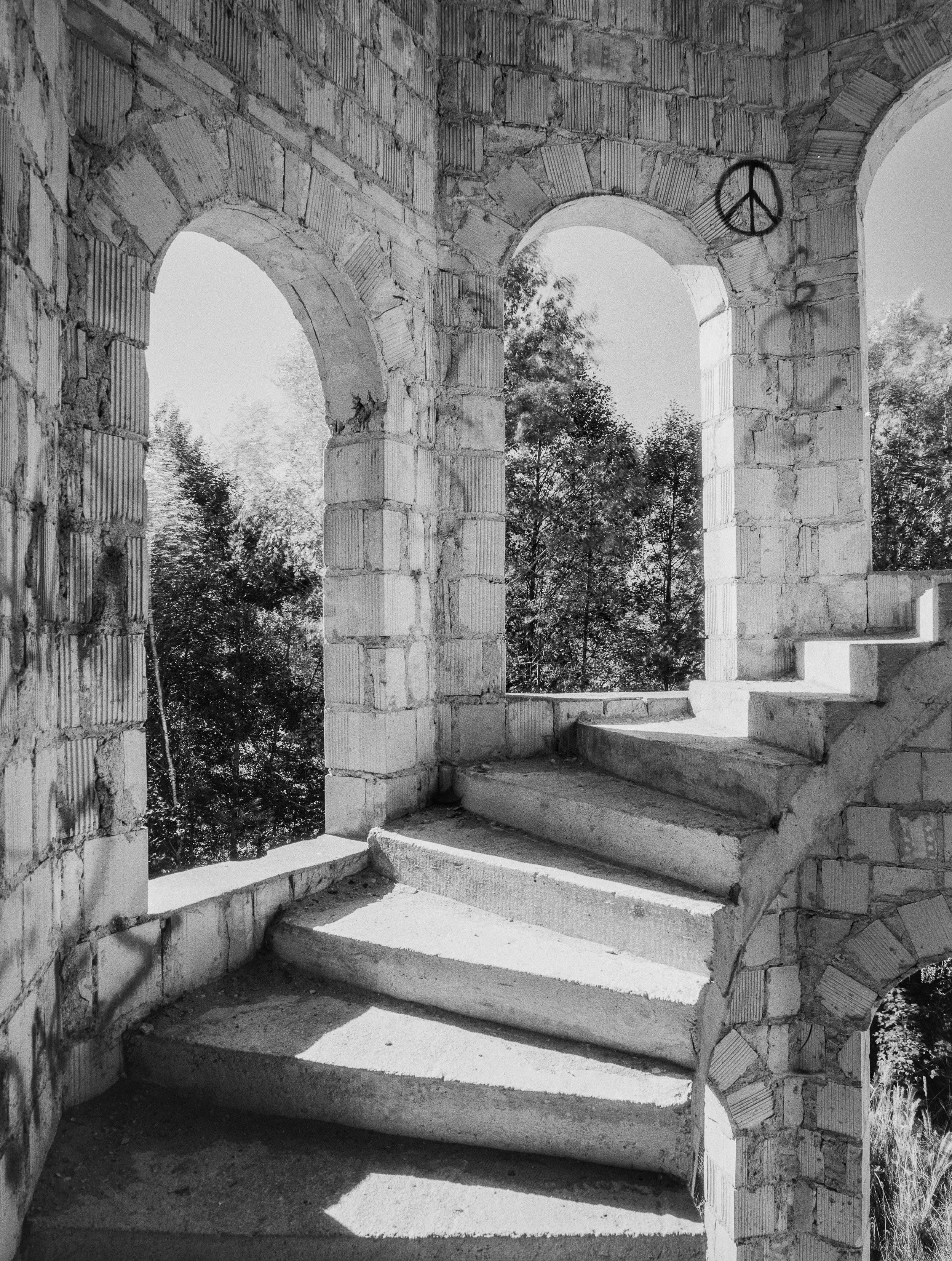
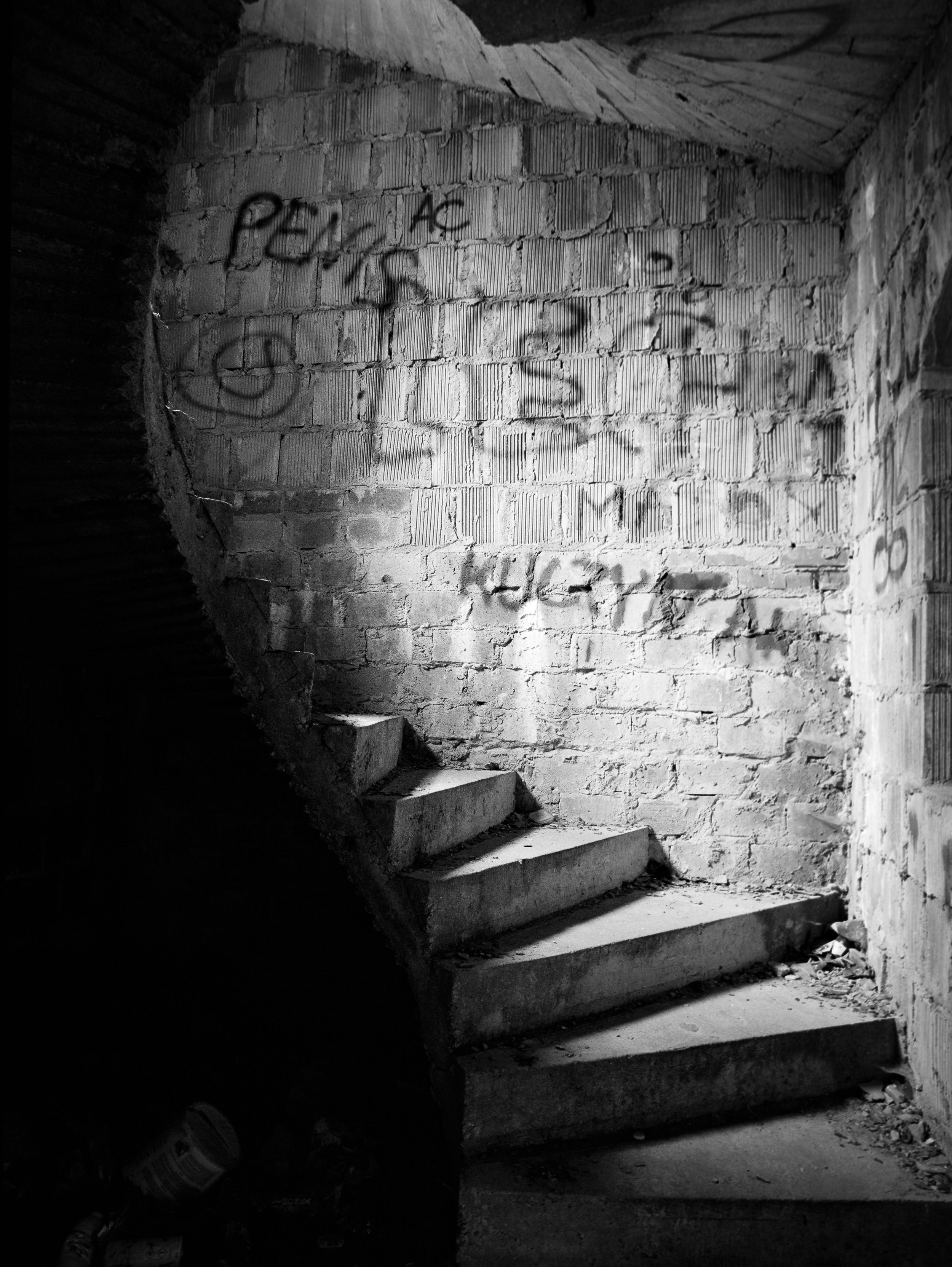
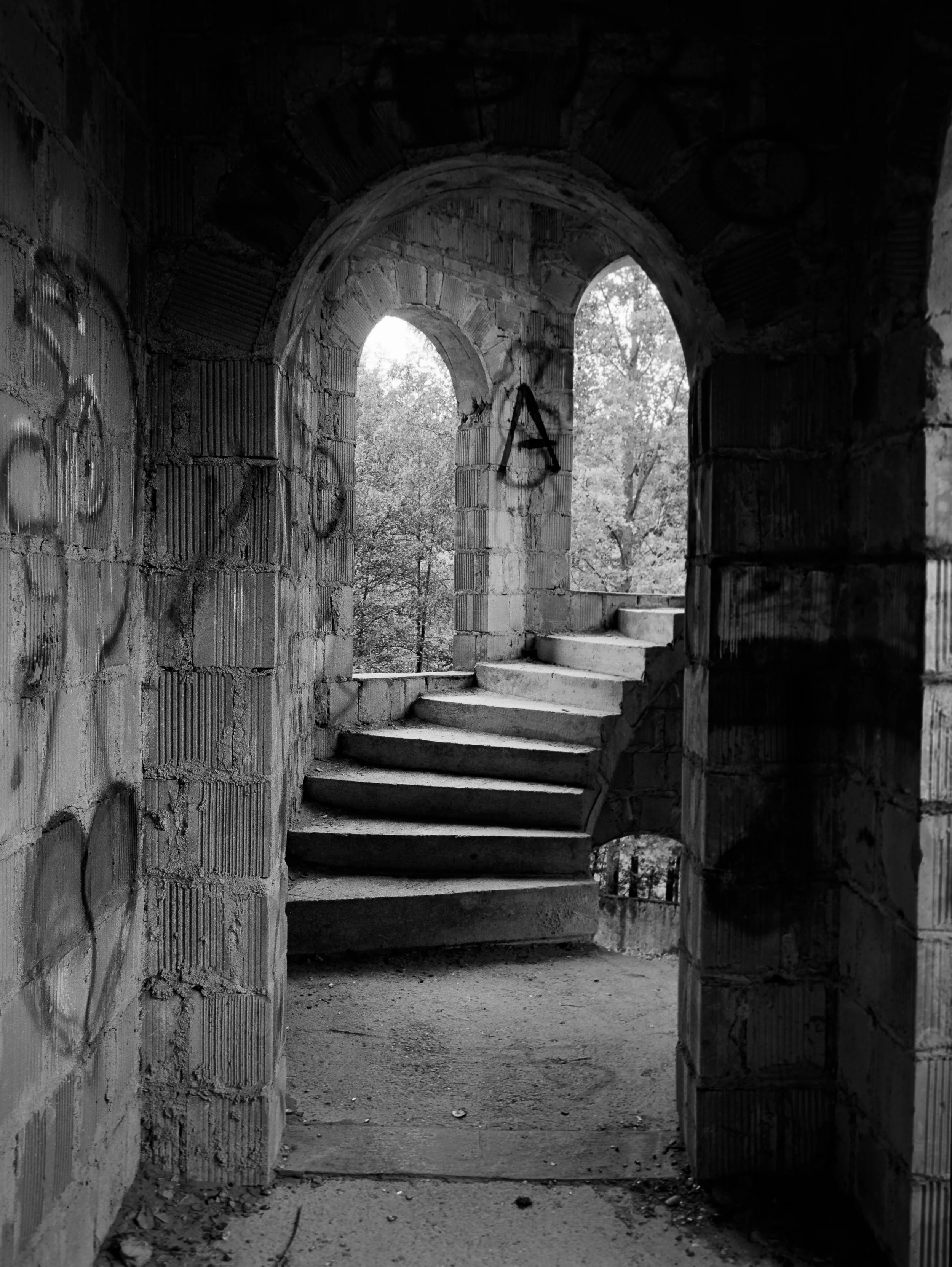
Unfinished staircases rising without destination, defining structure in the absence of function. Photo: Bjørn Joachimsen.
Infrastructure is minimal. Parking is informal and often chaotic, with narrow access roads becoming congested. Local residents experience significant disruption during peak visitation.
At the same time, the site continues to function as a cultural attraction. Wedding photoshoots, casual tourism, and even speculative fantasies—such as transforming the site into a “Polish Hogwarts”—illustrate how the structure exists simultaneously as ruin, spectacle, and projection surface.
The contradiction is central: a prohibited site that functions as a destination.
Risk and Reality
The dangers are not theoretical. The structure remains an active hazard.
Unsecured staircases, open shafts, unstable ceilings, and deteriorating materials create a high-risk environment. Accidents have occurred, including serious injuries from falls. Entry is illegal, yet widely ignored.
This tension—between accessibility and danger—defines the contemporary condition of the site.
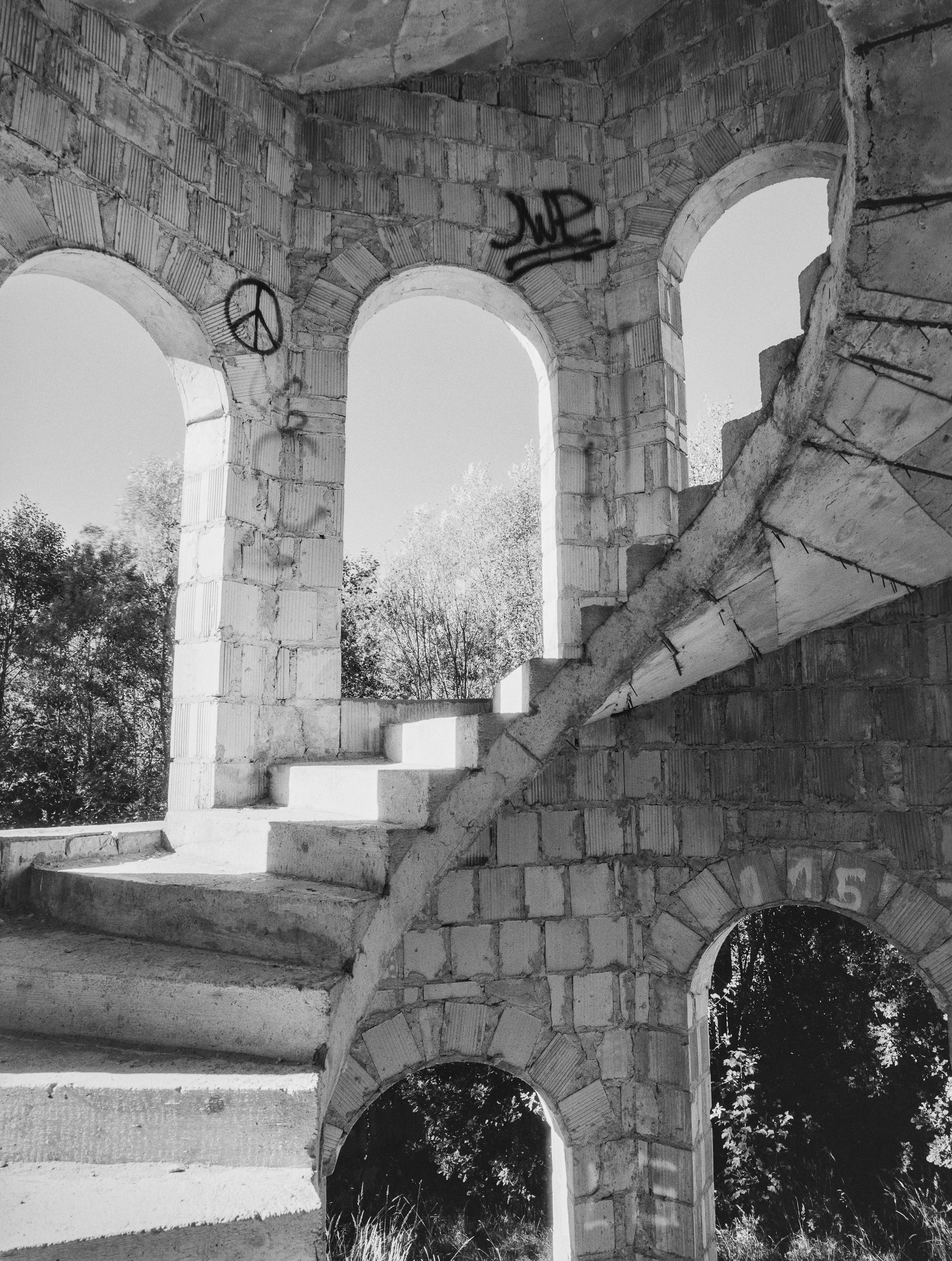
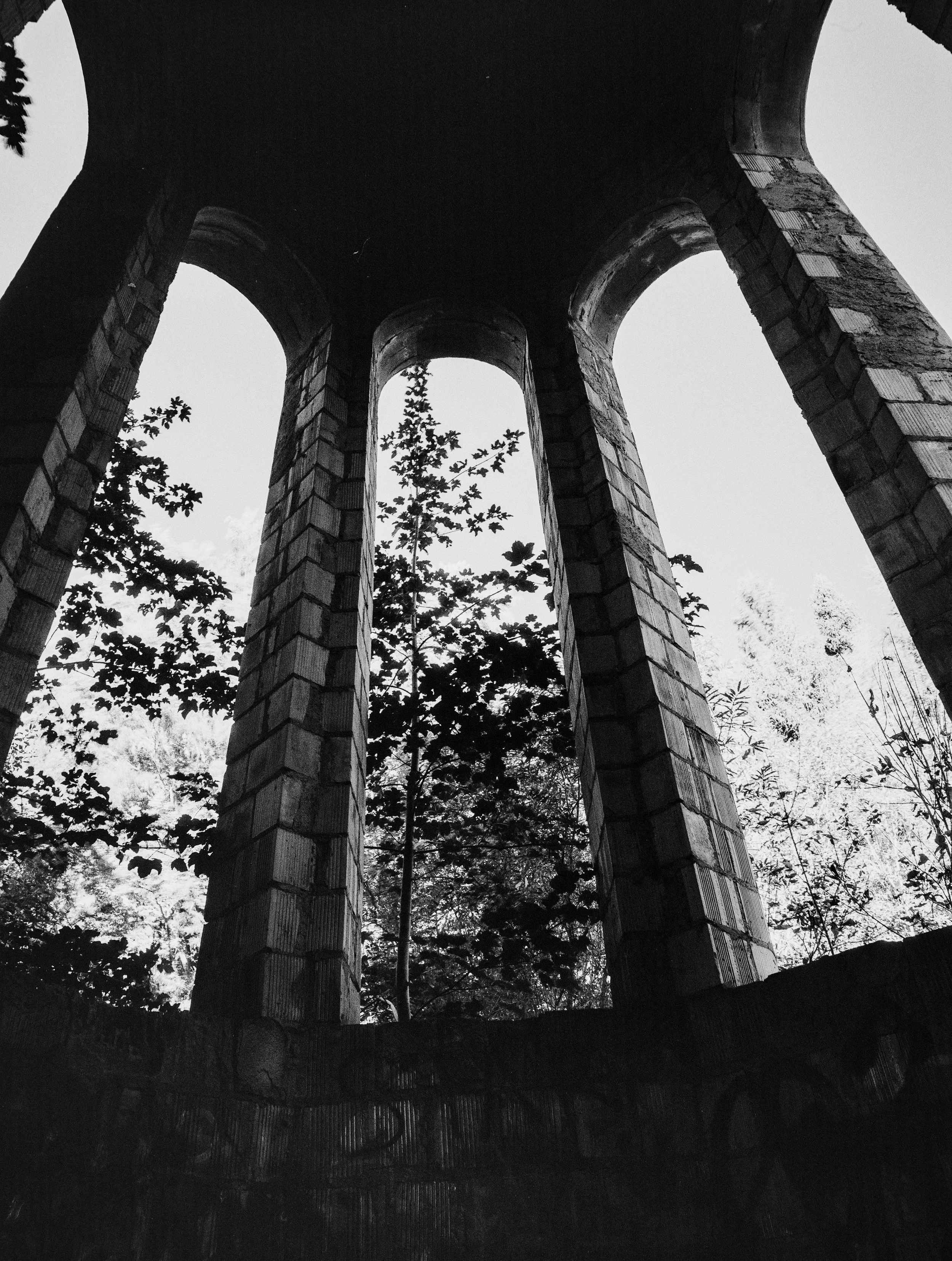
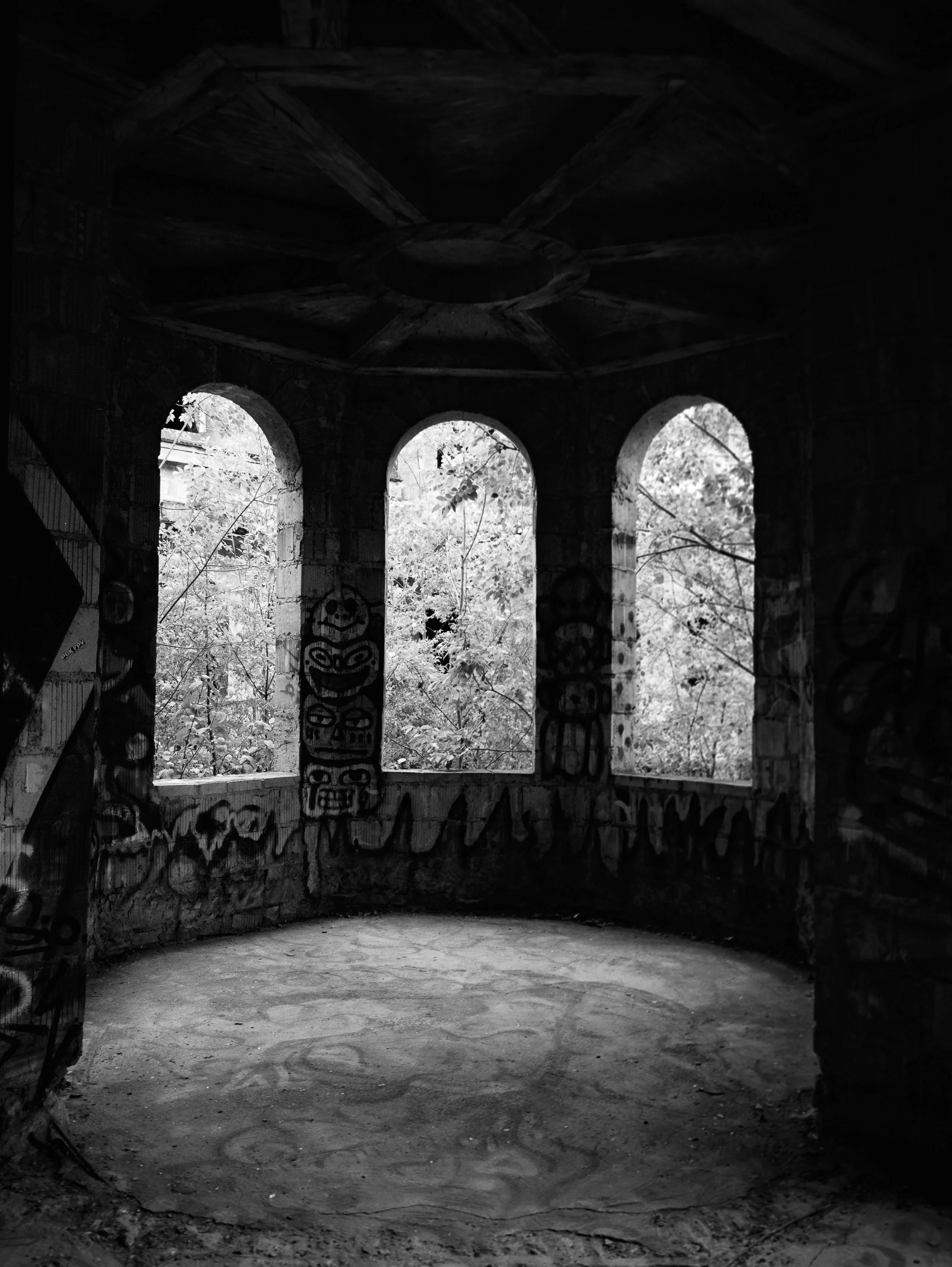
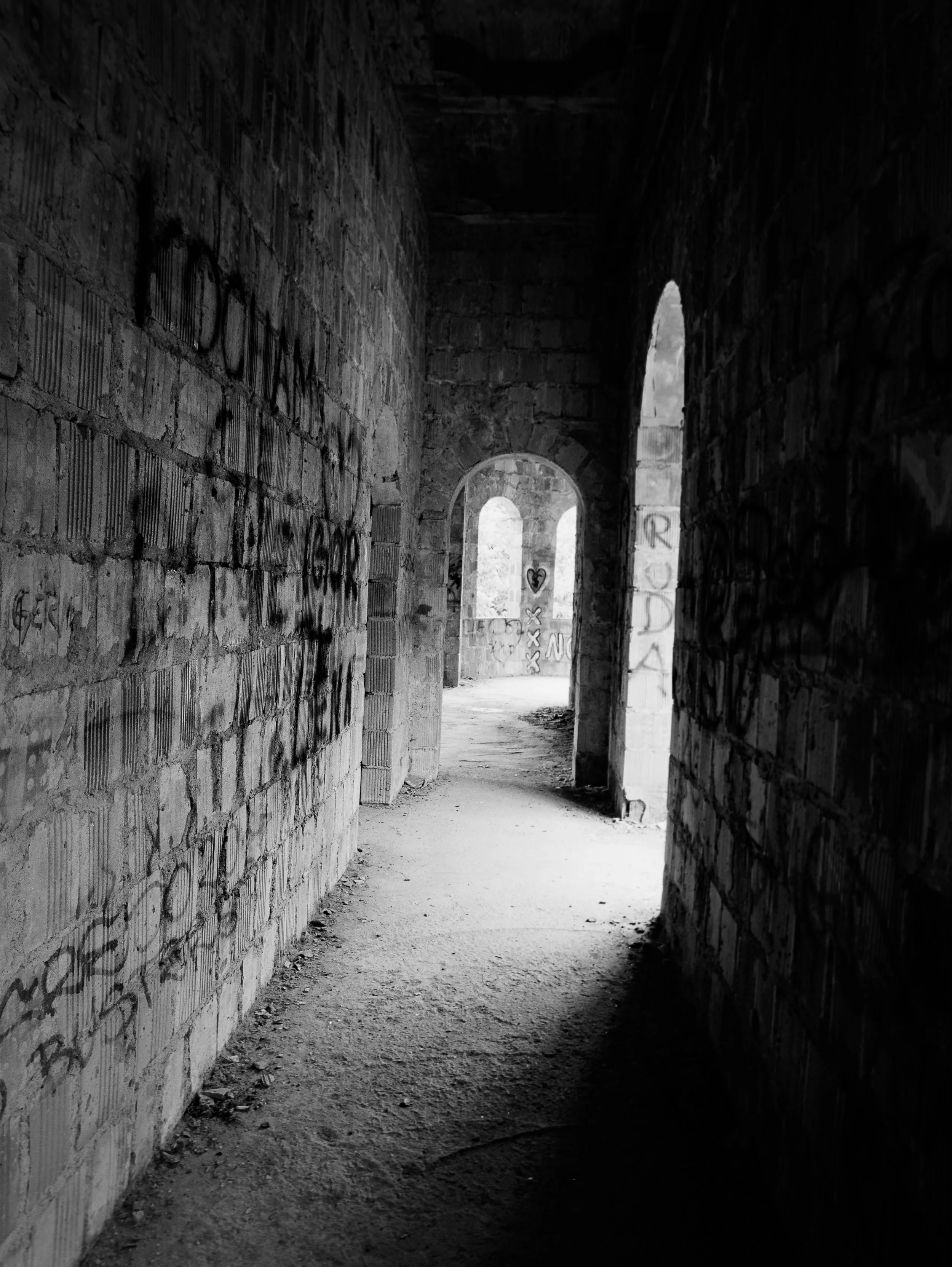
Tower interiors reduced to geometry and vertical rhythm, stripped of all symbolic ambition. Photo: Bjørn Joachimsen.
Architecture Without Resolution
Architecturally, the building consists of four interconnected wings enclosed by a perimeter wall and accessed through a gatehouse. Towers define the corners; corridors and staircases form a dense internal network. Planned features—such as a central fountain, elevator, chapel or ballroom, and a large indoor pool—remain unrealized.
The structure stands on moisture-heavy ground, contributing to ongoing deterioration.
Photographic Study – Form, Silence, and Incompletion
The accompanying photographic series is produced using analog medium format cameras and black-and-white film. This is not merely an aesthetic choice, but a methodological one.
Black and white isolates structure from distraction, reducing the building to mass, geometry, and repetition. In this reduction, the castle is revealed not as architecture in use, but as form without resolution.
Medium format imposes deliberation. Each frame captures fine detail: textures of unfinished concrete, the rhythm of staircases, the intrusion of light through empty openings.
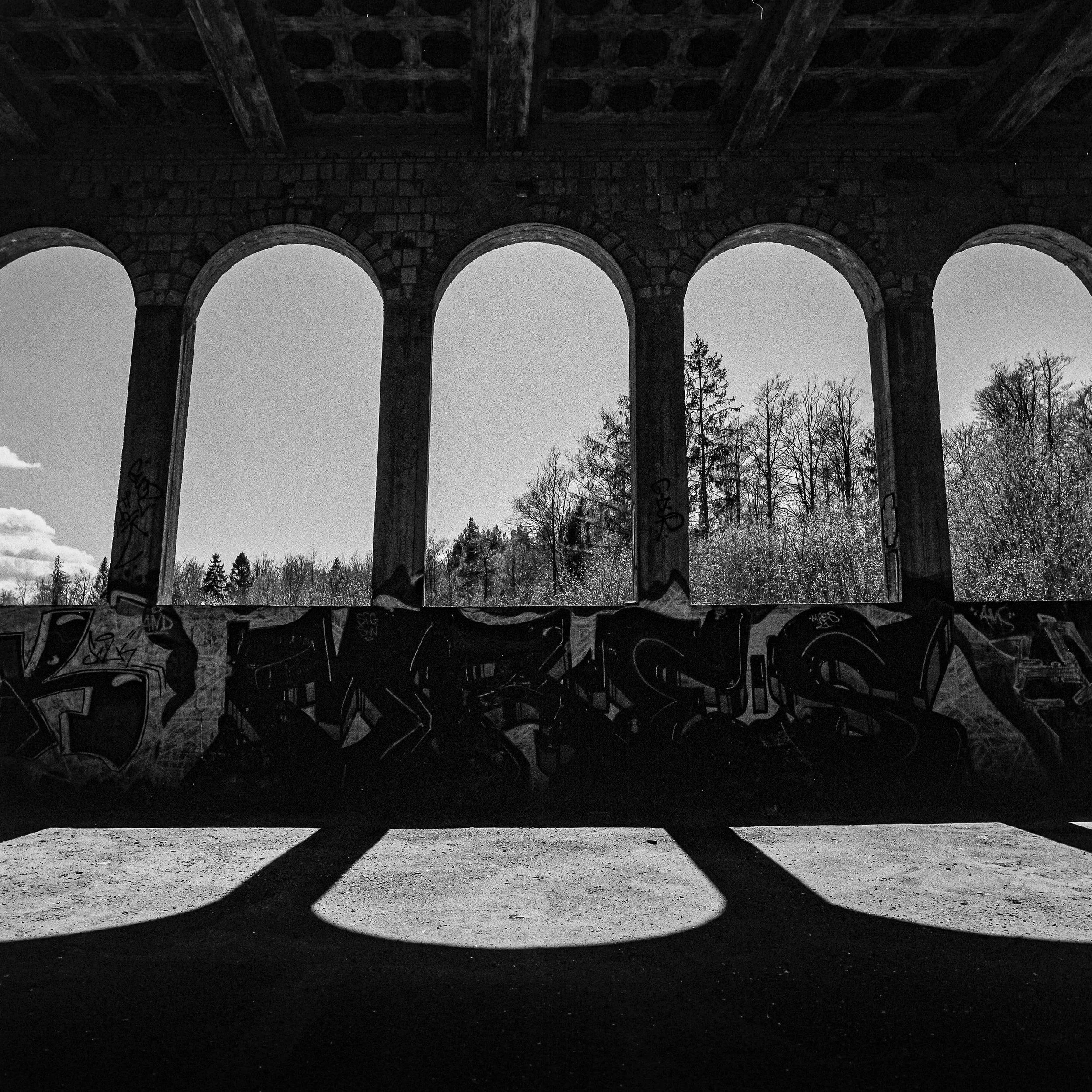
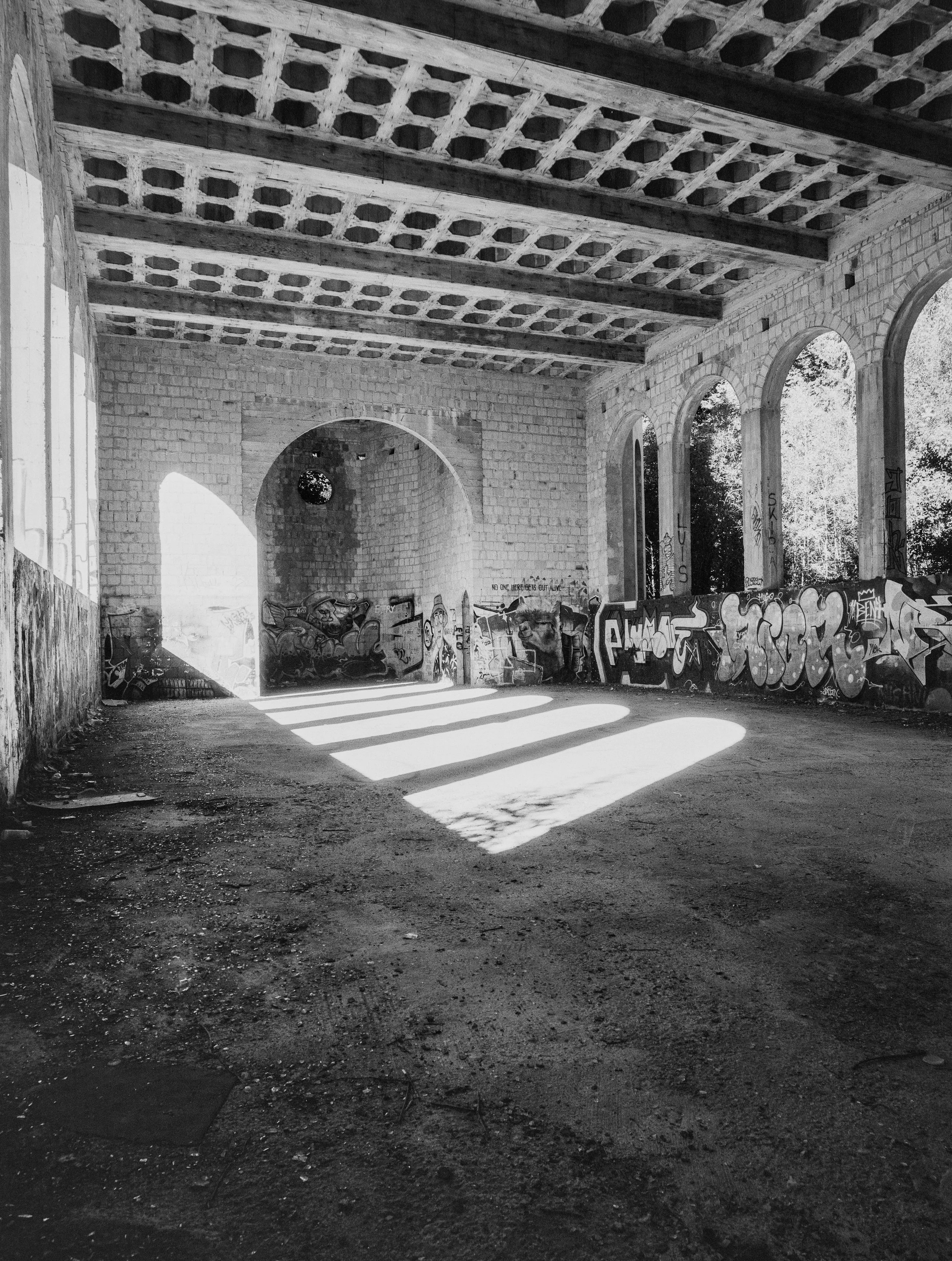
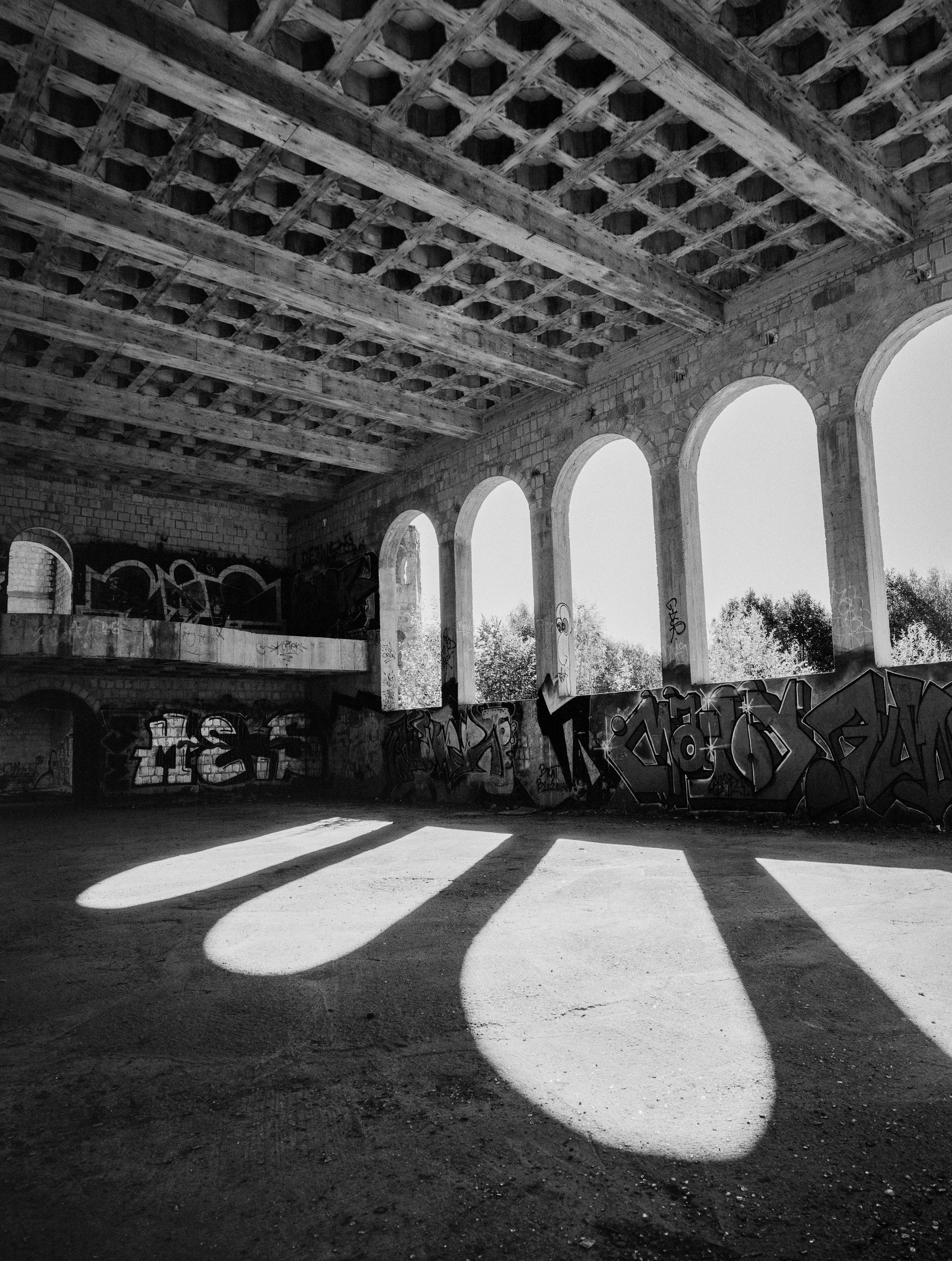
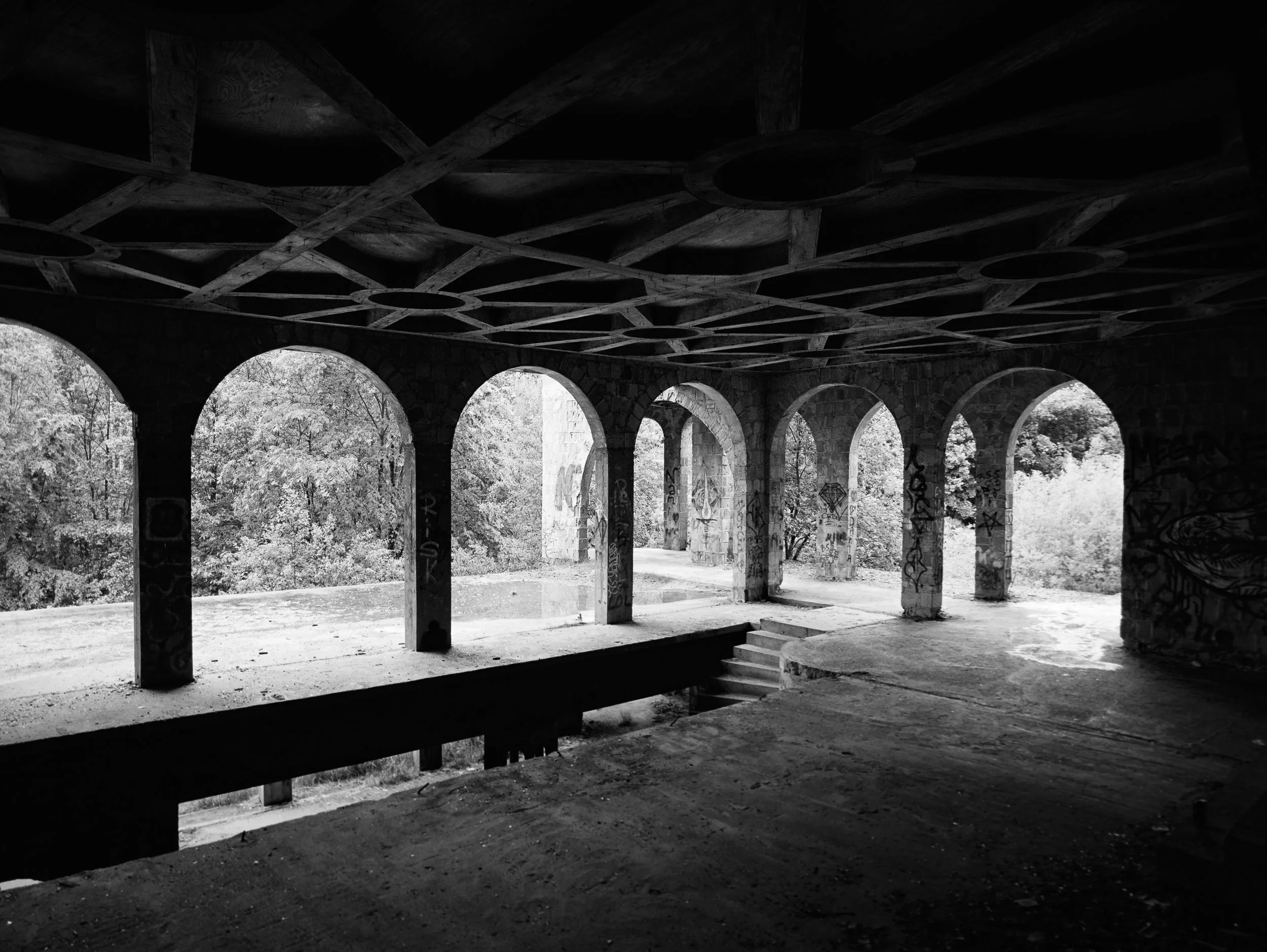
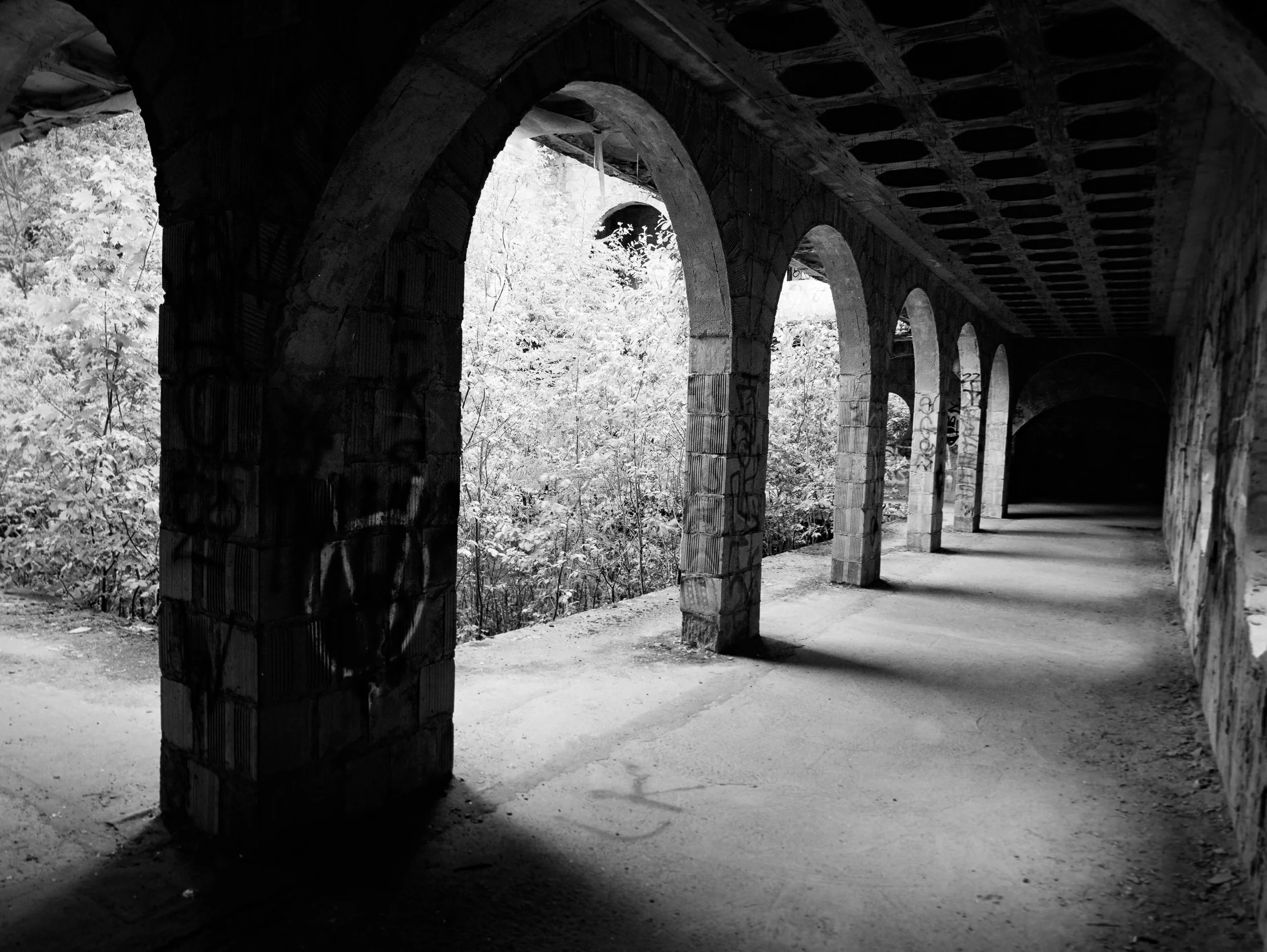
The ballroom that was never realized—an open volume defined only by scale and silence. Photo: Bjørn Joachimsen.
Light enters without mediation. It defines space rather than illuminating it. Corridors dissolve into shadow; staircases emerge as sculptural forms. There is no habitation—only scale, silence, and interruption.
The work does not document a place. It examines a condition: an architectural gesture arrested in time.
Sources
Atlas Obscura –
https://www.atlasobscura.com/places/lapalice-castleKashubian Tourism Portal (Szwajcaria Kaszubska) –
https://szwajcariakaszubska.com/en/156-szwajcaria-kaszubska-castle-in-lapalicePolish Wikipedia –
https://pl.wikipedia.org/wiki/Zamek_w_%C5%81apalicachMyNaSzlaku –
https://mynaszlaku.pl/zamek-lapalice-niedokonczona-budowla-na-kaszubach/
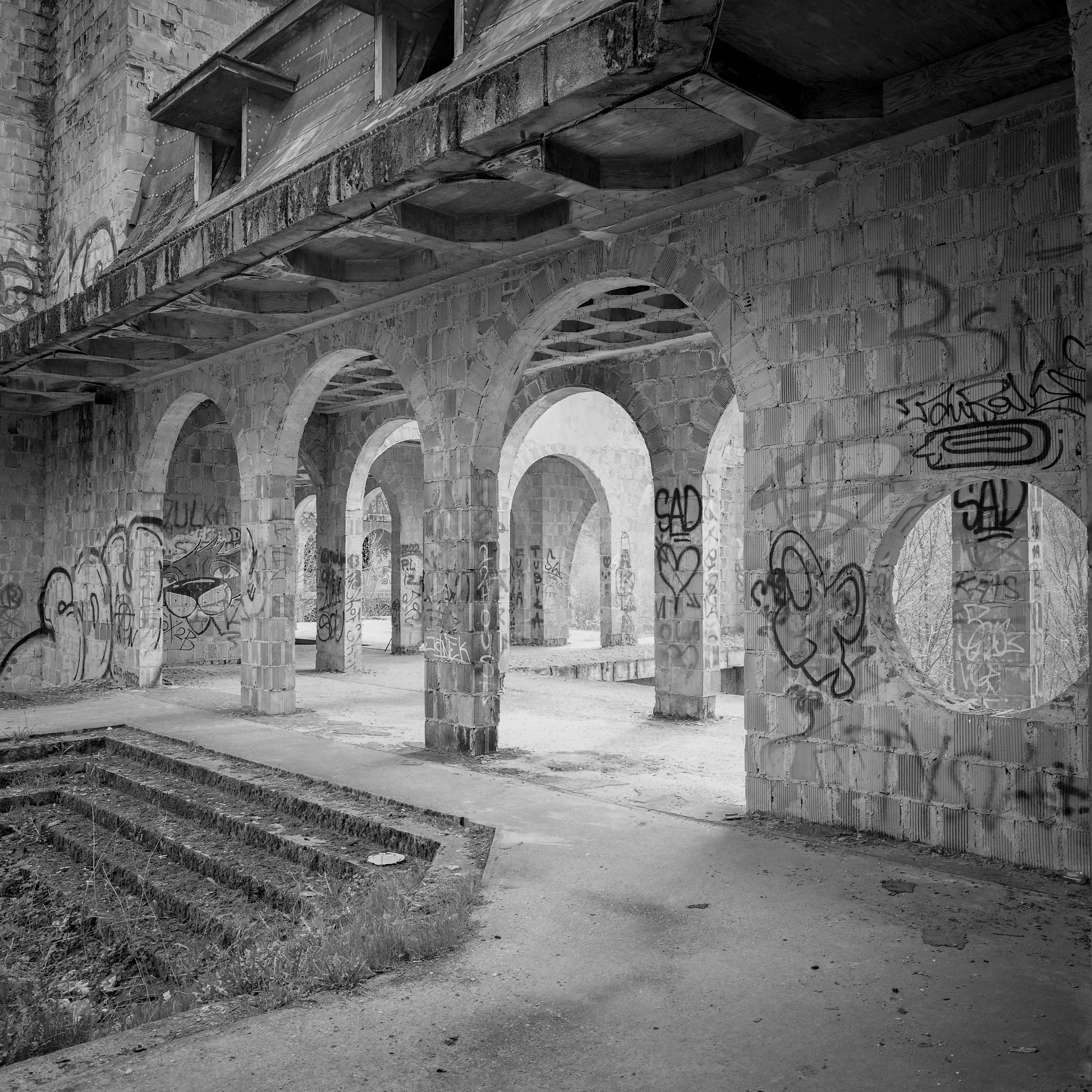
The ballroom that was never realized—an open volume defined only by scale and silence. Photo: Bjørn Joachimsen.