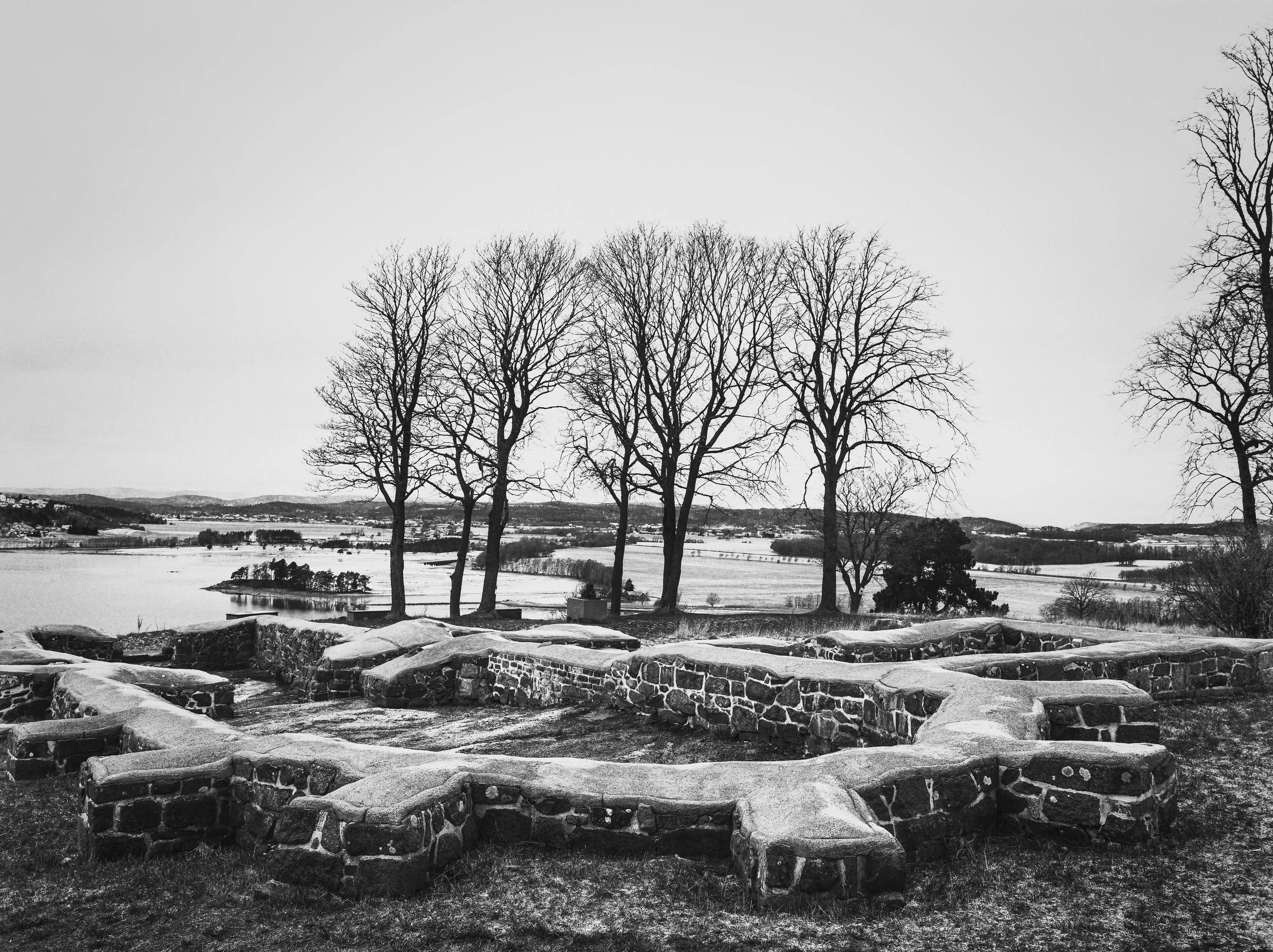
The introduction of Ilford Pan F+ in 4×5” and 8×10” represents more than an extension of the range. As a slow black-and-white film with exceptionally fine grain and high acutance, PAN F+ is defined by a steeper midtone curve than more forgiving emulsions such as Ilford FP4 + and modern T-grain alternatives like Ilford Delta 100. This results in higher midtone contrast under standard development, producing clearer tonal separation and more defined textures. Surfaces are rendered with greater clarity and physical presence, giving the film a distinctly graphic quality.
Bjørn Joachimsen (text & photo)
In large format, this character is not merely visible—it becomes fully controllable. Exposure and development can be adjusted individually for each sheet, allowing the photographer to work directly with the film’s sensitometric properties. The introduction of Ilford Pan F Plus in 4×5” and 8×10” represents more than an extension of the range. As a slow black-and-white film with exceptionally fine grain and high acutance, PAN F+ is defined by a steeper midtone curve than more forgiving emulsions such as Ilford FP4 Plus and modern T-grain alternatives like Ilford Delta 100. This results in higher midtone contrast under standard development, producing clearer tonal separation and more defined textures. Surfaces are rendered with greater clarity and physical presence, giving the film a distinctly graphic quality.
In large format, this character is not merely visible—it becomes fully controllable. Exposure and development can be adjusted individually for each sheet, allowing the photographer to work directly with the film’s sensitometric properties.
A New Working Latitude
In large format, the necessity of developing an entire roll identically disappears. Each negative can be processed individually and tailored to the contrast of the subject. This enables a consistent application of the Zone System as developed by Ansel Adams in collaboration with Fred Archer.
Exposure and development are no longer separate decisions, but interdependent variables within a single process. For a film such as PAN F+, which responds visibly to small changes in development, this level of control is fundamental.
What Large Format Brings
Large format photography changes not only the scale of the image, but the methodology of control.
Each sheet of film represents an independent exposure and development decision. This removes the need to average exposure and development across multiple images, allowing each negative to be optimised individually.
For PAN F+, this is particularly significant. Its steeper midtone curve and limited shoulder require precise control over contrast. In large format, this control can be applied directly through individual development adjustments—commonly referred to as N, N−1 or N+1 development.
This enables the photographer to match the film’s response to the contrast of the scene. High-contrast subjects can be controlled through reduced development, while low-contrast scenes can be expanded. The film’s inherent characteristics are thus not limitations, but variables that can be shaped.
The Zone System in Literature
The theoretical foundation for this approach is described in the work of Ansel Adams, particularly in The Negative, The Print and The Camera.
These books establish a systematic relationship between exposure, development and printing, based on placing tonal values within defined zones and controlling their reproduction through development. The Zone System provides a practical framework for understanding and controlling the photographic process.
Emulsion Characteristics
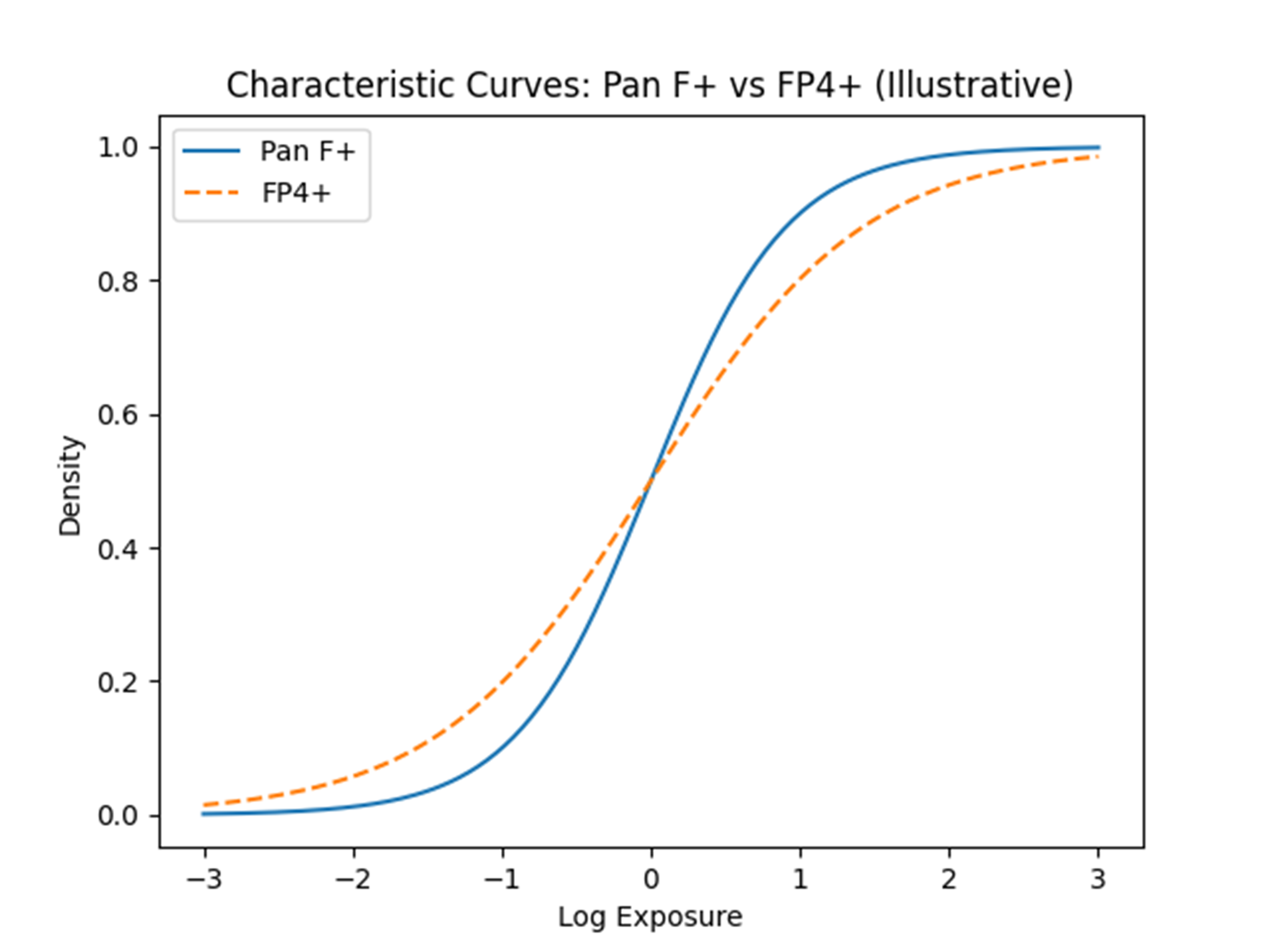
Film charachteristics comparison:Illustrative characteristic curves of Ilford Pan F Plus and Ilford FP4 Plus. The toe (lower left) represents shadow response, the central slope defines midtone contrast, and the shoulder (upper right) shows highlight compression. PAN F+ has a steeper midtone region and a more abrupt shoulder, while FP4+ provides a more gradual tonal response and greater exposure latitude.
PAN F+ is a panchromatic black-and-white film with a nominal speed of ISO 50. According to Ilford Photo, it is characterised by extremely fine grain and high acutance. Its defining quality, however, lies in its characteristic curve.
Compared with FP4+ and Delta 100, PAN F+ exhibits a steeper linear region. This produces higher midtone contrast under standard development. Contrast is governed by the slope of the curve (gamma), and it is this steeper gradient that enables PAN F+ to separate fine tonal differences more distinctly.
This is not a fixed property independent of process, but a function of the interaction between emulsion, exposure and development.
How Film Records Light
The characteristic curve describes the relationship between exposure and density.
In the toe region, PAN F+ shows limited response. The relatively short toe results in reduced exposure latitude in the shadows, requiring precise placement of shadow values to retain detail.
In the linear midtone region, the curve is steeper than that of FP4+. This produces stronger tonal separation and is the basis for the film’s ability to render texture and structure with clarity.
In the shoulder region, compression is limited. Highlights build density more rapidly than in more forgiving emulsions, making them sensitive to overdevelopment.
The combination of short toe, steep midtone gradient and restrained shoulder defines the working characteristics of the film.
Light Metering – Two Approaches
Accurate metering is essential when working with PAN F+.
Spot metering allows individual tonal areas to be measured and placed deliberately within the tonal scale. By measuring a shadow where detail is required and increasing exposure accordingly, that value is moved into the linear portion of the curve. This is the basis of the Zone System developed by Ansel Adams and Fred Archer.
Incident metering measures the light falling on the subject and provides a stable exposure under consistent lighting conditions. However, it does not offer the same control over tonal placement.
Exposure and Development
In film photography, exposure determines the shadows, while development determines the highlights.
With PAN F+, the limited toe requires precise exposure to ensure shadow detail, while the restrained shoulder requires controlled development to prevent excessive highlight density.
Compared with FP4+, the film is less forgiving, but offers greater precision when handled correctly
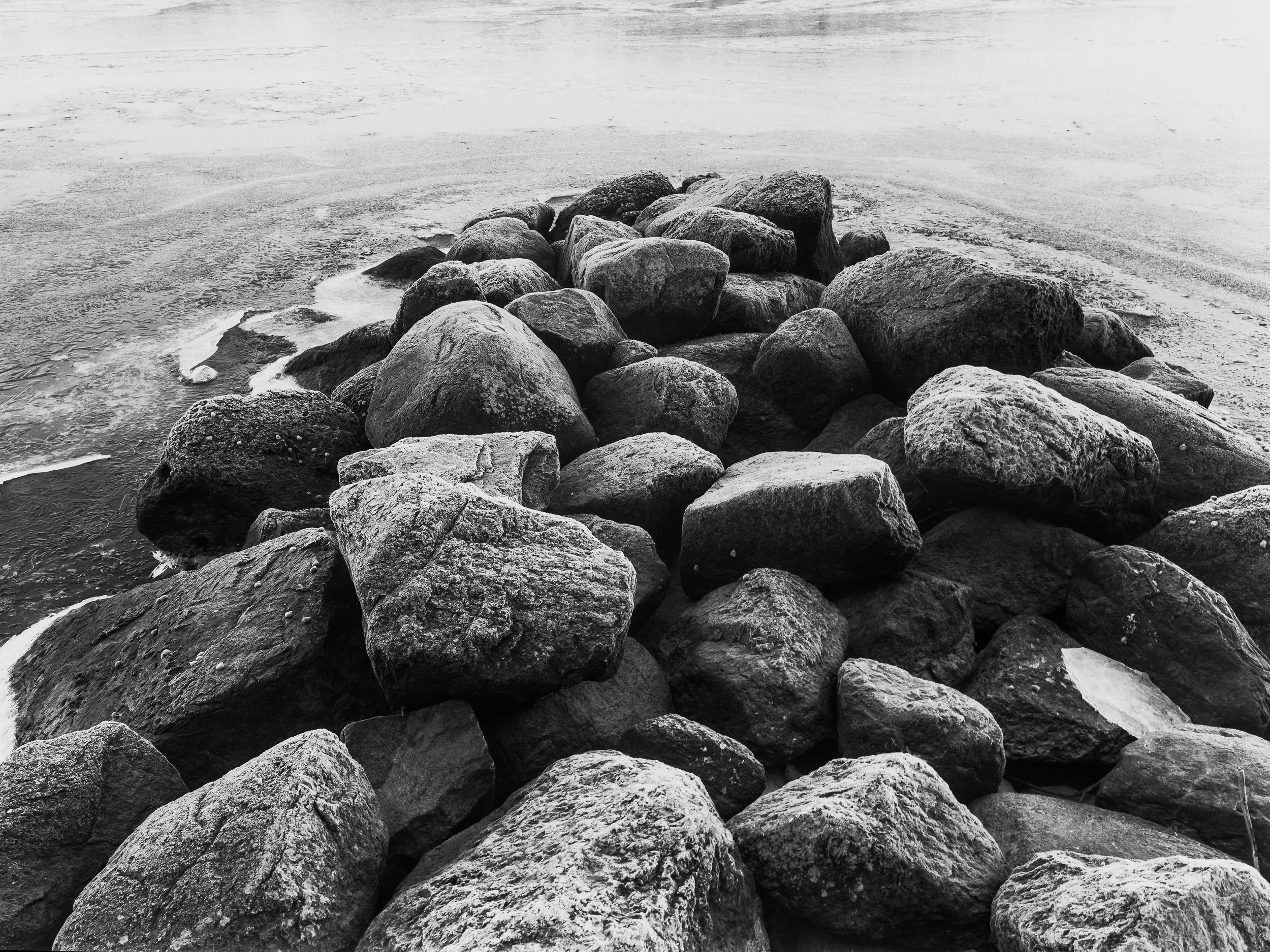
Frozen pebbles at Hella, Nøtterøy, Norway. Exposed on Ilford Pan F Plus (120) and developed in Ilford ID-11 following Ilford Photo guidelines. The film’s higher midtone contrast allows for precise tonal separation, making it particularly effective in rendering fine surface textures. Camera: Fuji GSW680III.Photo: Bjørn Joachimsen.
Choosing the Best Ilford Developer for Pan F+
| Purpose | Liquid Developer | Powder Developer |
|---|---|---|
| Best overall image quality | ILFOTEC DD-X | ID-11 (Stock) |
| Finest grain | ILFOTEC DD-X | PERCEPTOL (Stock) |
| Maximum sharpness | ILFOTEC DD-X | ID-11 (1+3) |
| One-shot convenience | ILFOSOL 3 | ID-11 (1+1) |
| ILFOTEC DD-X | MICROPHEN (1+1) | |
| Economy | ILFOTEC LC29 (1+29) | ID-11 (1+3) |
| MICROPHEN (1+3) | ||
| Rapid processing | ILFOTEC HC (1+31) |
Ilford Photo Technical information for Pan F Plus (downloadable PDF)
Structure and Tonal Separation
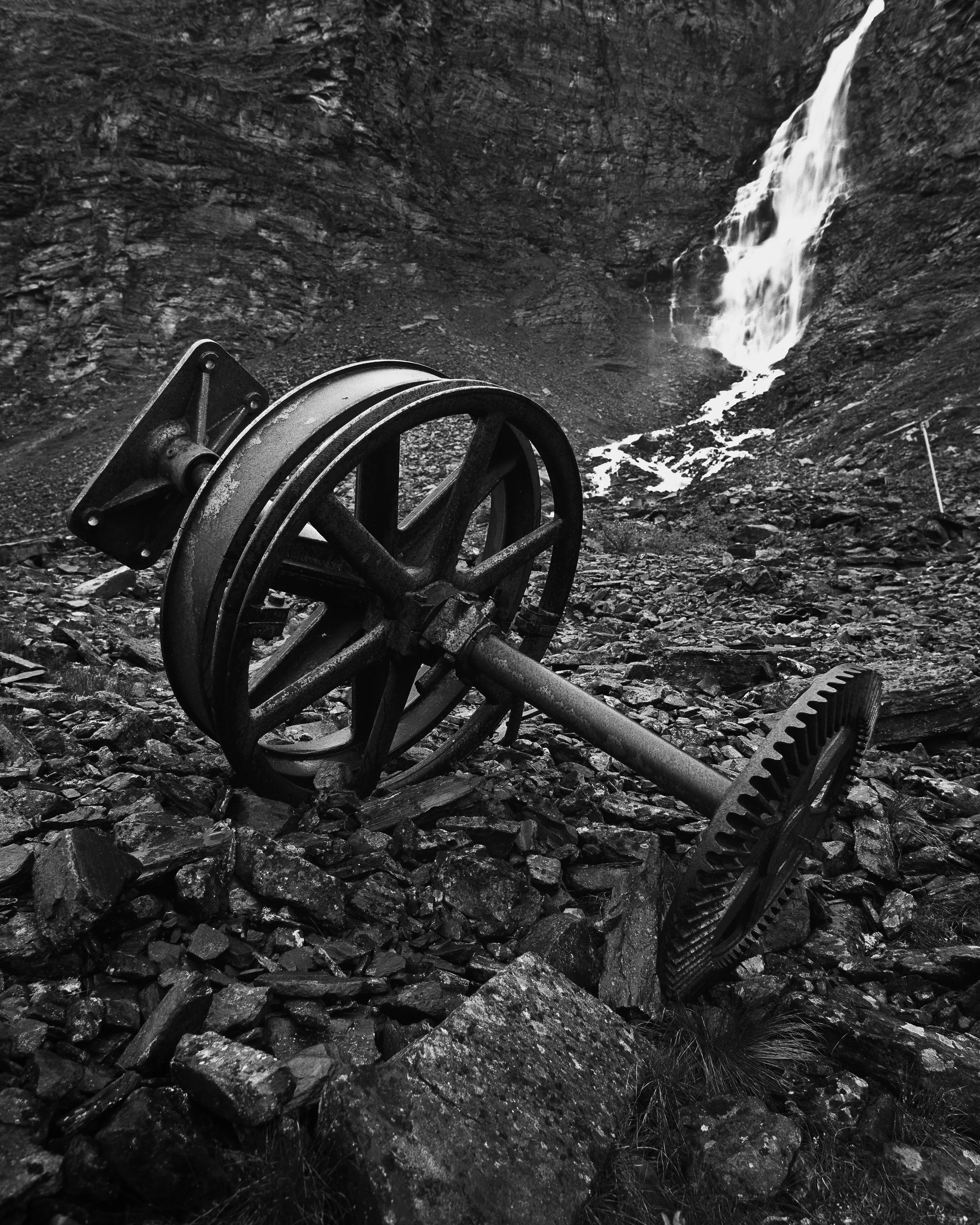
Kåfjord, Norway. Exposed on Ilford Pan F Plus (120) and developed in Kodak Xtol. Its higher midtone contrast and fine grain make PAN F+ particularly effective for rendering textures in rusted and decaying industrial subjects. Camera: Mamiya RZ67 Pro II.
The higher midtone contrast of PAN F+ results in more pronounced tonal separation. Small differences in reflectance produce larger differences in density, allowing textures to be rendered with clarity.
This is not simply a question of sharpness, but of tonal structure. Materials such as stone, wood, foliage and skin are defined by their internal tonal variation. Because PAN F+ compresses these variations less than FP4+, the resulting image appears more structured and more clearly articulated.
Pulling as a Control Strategy
Exposing PAN F+ at a lower effective speed, such as EI 25–32, combined with reduced development, provides an effective method of control.
Increased exposure lifts shadow values into the linear region of the curve, improving shadow detail. Reduced development decreases the slope of the curve and restrains highlight density.
The result is a more balanced negative with improved exposure latitude and better highlight control. The midtone curve becomes slightly less steep, but remains sufficiently defined to preserve tonal separation.
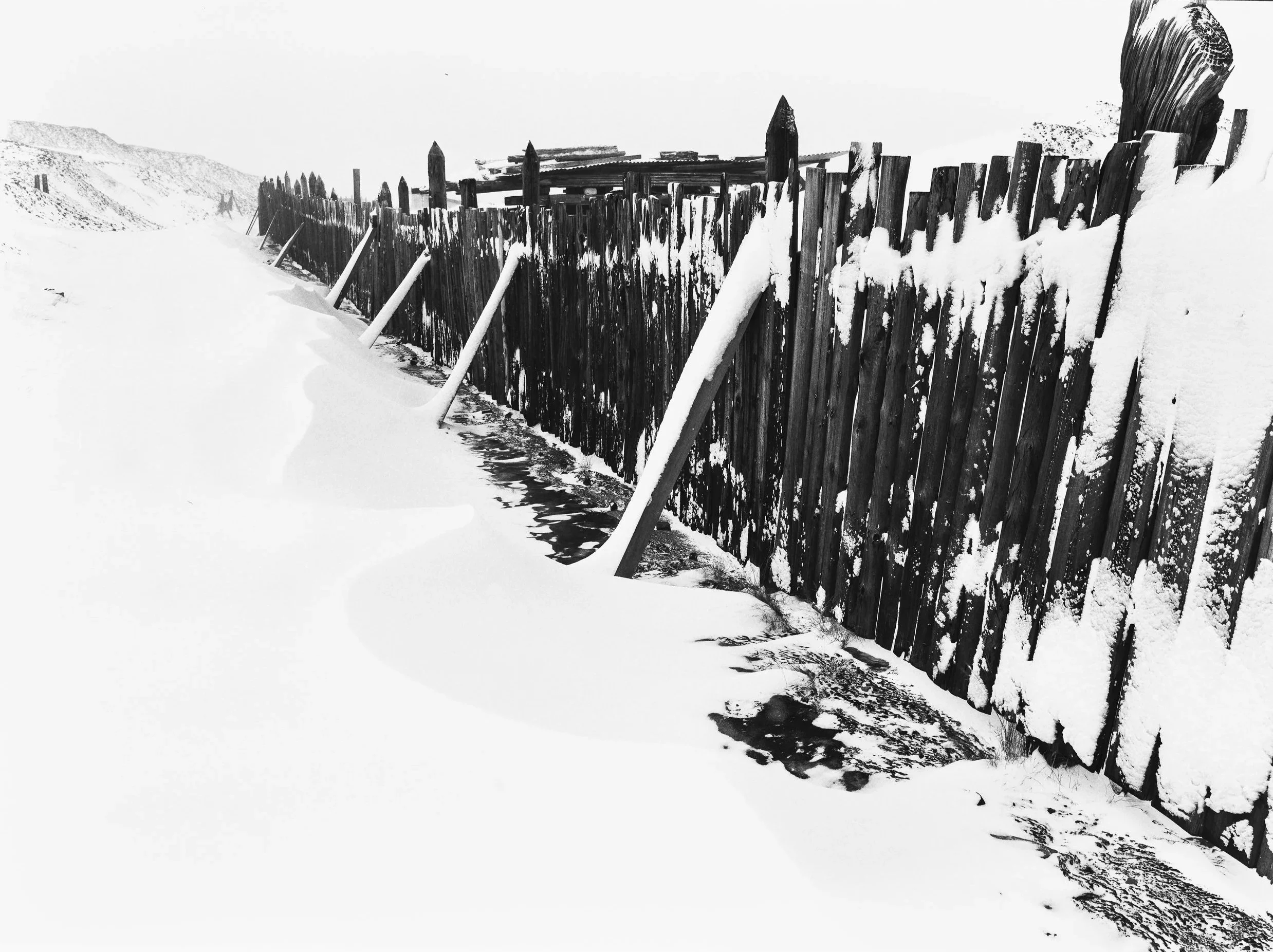
Røros, Norway. Exposed on Ilford Pan F Plus (120) at ISO 50 and developed in Ilford ID-11 with development time reduced by 10% from Ilford Photo recommendations. This adjustment helps control highlight density and maintain texture in high values. Exposure was based on incident light metering for greater accuracy. Camera: Fuji GSW680III. Photo: Bjørn Joachimsen.
Development and Manufacturer Data
According to Ilford Photo, development times for PAN F+ are specified for its nominal sensitivity of ISO 50. In Ilford ID-11, this corresponds to approximately six to seven minutes at 20°C (1+1), depending on agitation and working method.
These values define a standard contrast level (gamma) under average conditions and should be understood as a reference point rather than a fixed prescription. Any deviation from the nominal exposure index—such as exposing at EI 25–32—requires a corresponding reduction in development time to maintain control over the characteristic curve.
Reducing development lowers the slope of the curve, moderating midtone contrast and restraining highlight density. This is particularly important for PAN F+, where the relatively short shoulder leads to a faster build-up of density in highlights. Such adjustments are part of established darkroom practice and sensitometric control, rather than explicit manufacturer recommendations.
Latent Image Stability
The latent image is the invisible microscopic change created in the silver halide crystals at the moment of exposure. Before development, the image does not yet exist as visible density, but as unstable development centres formed within the emulsion. During development, these centres are amplified into the visible negative image.
An important characteristic of Ilford Pan F Plus is that the latent image stability is significantly weaker than with many other black-and-white emulsions. According to Ilford Photo, exposed PAN F+ should ideally be processed within three months.
With PAN F+, this latent image is less stable over time than with many comparable films. If exposed film is stored for extended periods before processing, the latent image may gradually deteriorate. The consequence is typically a loss of shadow detail, reduced overall density, lower contrast, and weakened tonal separation. In severe cases, highlights may also lose brilliance and local tonal relationships may become less distinct.
This is particularly important with PAN F+ because the film already has relatively limited exposure latitude in the toe region. Any degradation of the latent image therefore tends to affect the shadow areas first. For critical work, exposed film should therefore be processed as soon as practical rather than stored for prolonged periods before development.
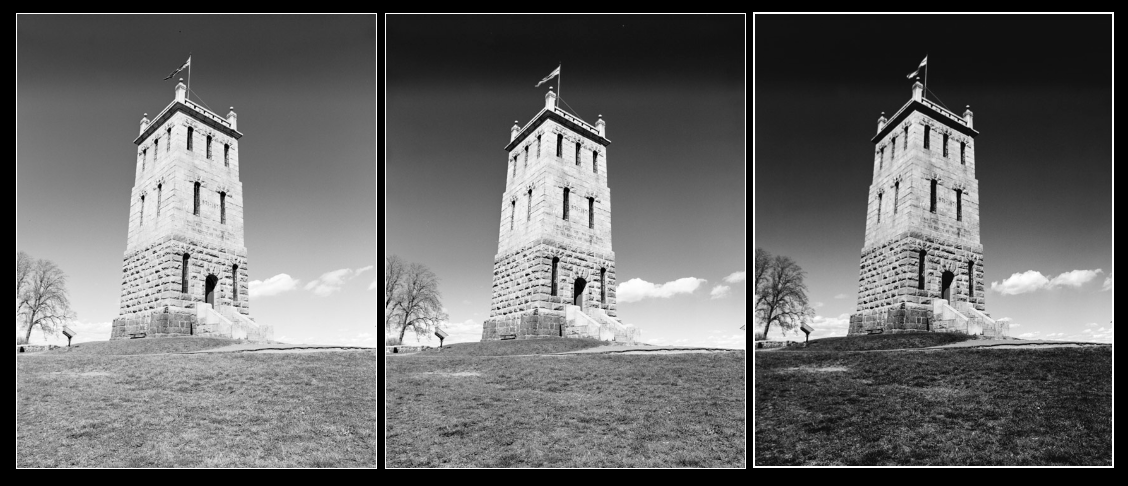
Tønsberg, Norway. From left to right: no filter, orange filter (No. 16), and red filter (No. 25). As filtration increases, blue wavelengths are progressively suppressed, causing the sky to darken from a light grey to a much deeper tone, while clouds remain bright and more clearly separated. The stone tower, composed of neutral tones, remains relatively stable but gains increased separation and definition against the darkening sky. Photographed on Ilford Pan F Plus (120 format). Camera: Mamiya RZ67 Pro II with Sekor 50mm f/4.5. Developed in Adox FX-39 II for 5 minutes at 20°C. Photo: Bjørn Joachimsen.
Spectral Sensitivity, Tonal Control and Filtration
The spectral sensitivity of PAN F+ plays a fundamental role in tonal rendering.
The film shows strong sensitivity in the blue and green regions (approximately 400–550 nm), with a reduced response towards longer red wavelengths and a noticeable fall-off beyond roughly 650 nm. This means that blue light is recorded more efficiently, while red tones are rendered darker in relation.
Because PAN F+ also exhibits higher midtone contrast, these spectral differences translate into more pronounced tonal separation. Filtration therefore becomes a precise tool for shaping tonal relationships, not simply overall contrast.
Orange and Red Filters
With PAN F+, coloured filters control how spectral information is translated into tonal structure.
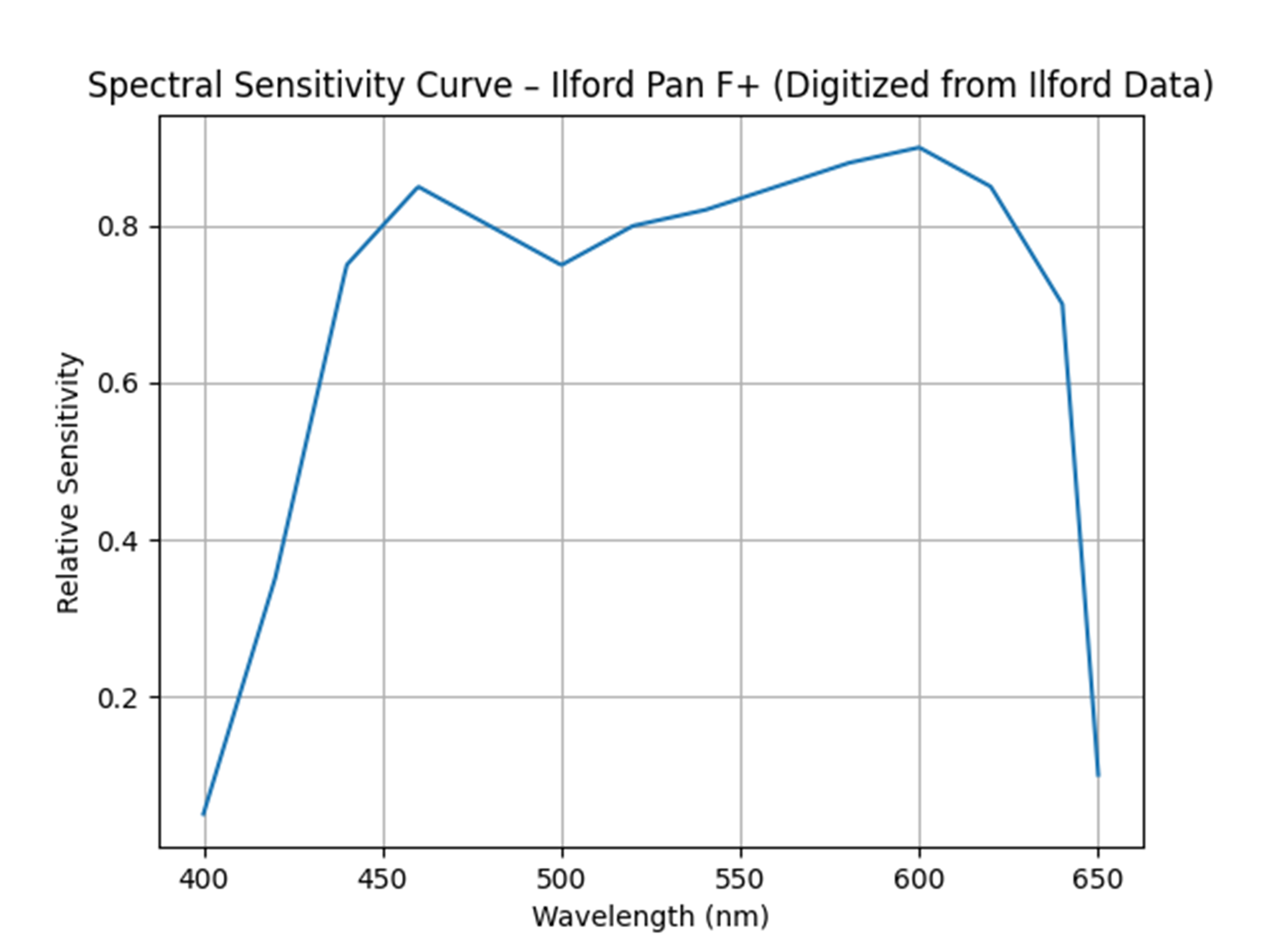
Spectral respons: llustrative spectral sensitivity curve of Ilford Pan F Plus. The film shows strongest sensitivity in the blue and green regions (approximately 400–550 nm), with a secondary response extending into the red region and a gradual fall-off beyond roughly 650 nm. This means that blue light is recorded more efficiently than red light, causing blue subjects such as sky to appear lighter, while red and warm-toned elements are rendered darker in the absence of filtration. The use of coloured filters modifies this spectral response, allowing tonal relationships to be controlled at the exposure stage.
An orange filter (No. 16) produces moderate darkening of skies and improved cloud separation. Foliage becomes slightly lighter and more clearly separated from surrounding elements. In portraiture, skin tones are gently lightened, minor blemishes are reduced, and freckles become less pronounced while preserving natural texture. Lips are slightly lightened, and eyes retain a balanced tonal relationship.
An orange-red filter (No. 22) increases tonal separation further by suppressing blue light more strongly and beginning to affect green wavelengths. Foliage becomes more clearly defined, with stronger separation of internal textures. In portraits, skin appears smoother and brighter, freckles are further reduced, lips are lightened, and eyes—especially blue or light-coloured eyes—begin to darken slightly, increasing contrast.
A red filter (No. 25) produces strong darkening of skies and significant tonal separation. Foliage becomes noticeably lighter, and atmospheric haze is reduced, increasing perceived clarity. In portraiture, skin tones are strongly lightened and smoothed, freckles and blemishes are largely suppressed, lips become much lighter and may lose definition if exposure is not controlled, and blue eyes can appear significantly darker, producing a striking but potentially stylised effect.
A deep red filter (No. 29) produces extreme tonal separation by transmitting primarily deep red wavelengths. Skies may approach black under clear conditions, and haze is significantly reduced, revealing distant detail. Foliage becomes very light and may lose tonal variation if not carefully exposed. In portraiture, skin can appear highly smoothed and luminous, with minimal visible texture. Freckles are largely removed, lips may appear pale, and eyes—particularly blue—can become very dark, creating a dramatic and often surreal rendering.
Filter Factors and Exposure Compensation
| Filter | Designation | Factor | Compensation |
|---|---|---|---|
| Yellow | 8 | 2× | +1 stop |
| Orange | 16 | 2–3× | +1 to +1.5 stops |
| Orange-Red | 22 | 3–4× | +1.5 to +2 stops |
| Red | 25 | 6–8× | +2.5 to +3 stops |
| Deep Red | 29 | 8–16× | +3 to +4 stops |
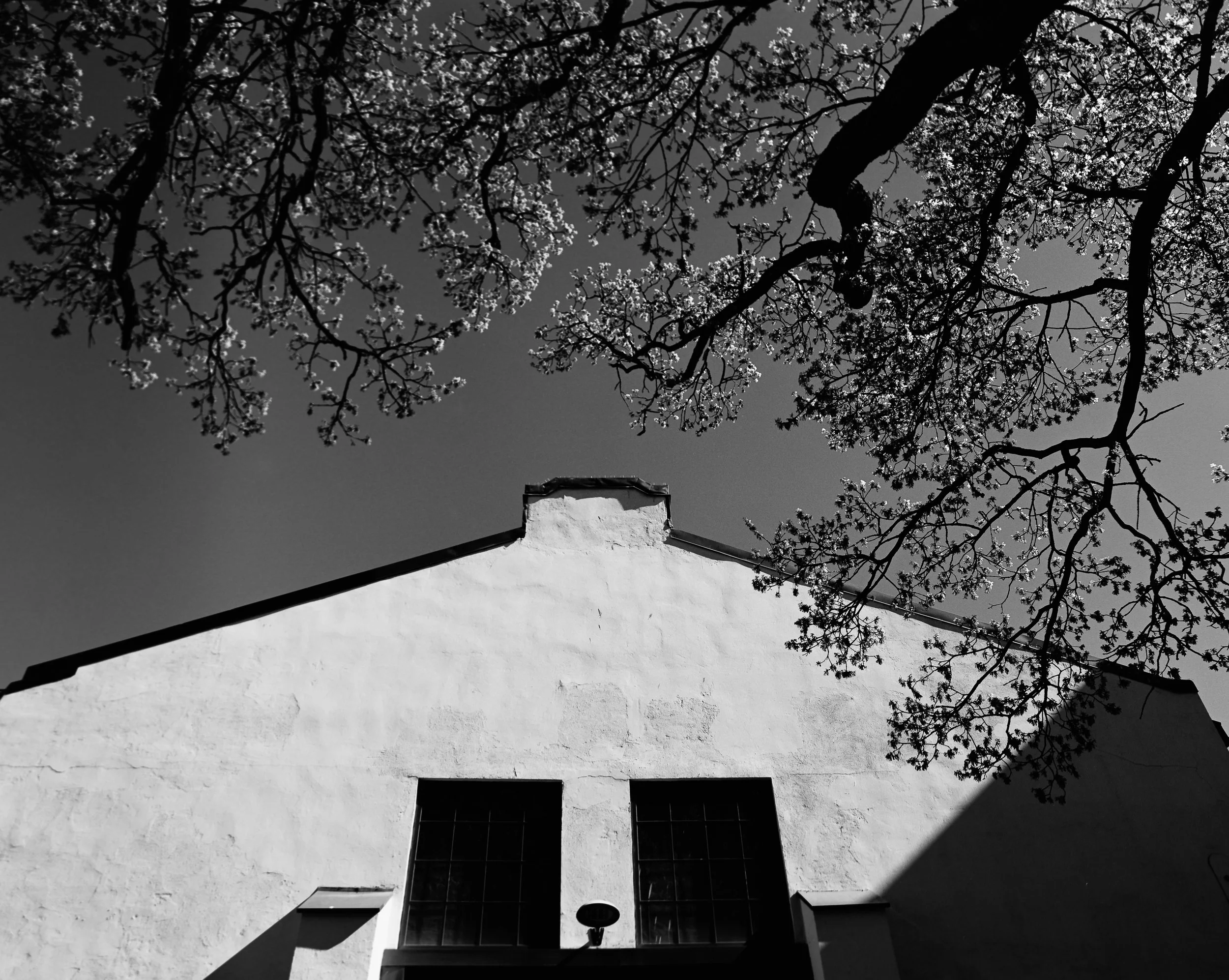
Tønsberg, Norway. Exposed on Ilford Pan F Plus (120) with a Mamiya RZ67 Pro II and Sekor 50mm f/4.5 using an orange filter (No. 16). The darker rendering of the blue sky increases separation between the building and background. Developed in Adox FX-39 II (5 minutes at 20°C). Photo: Bjørn Joachimsen.
Negative and Print – The Role of Multigrade
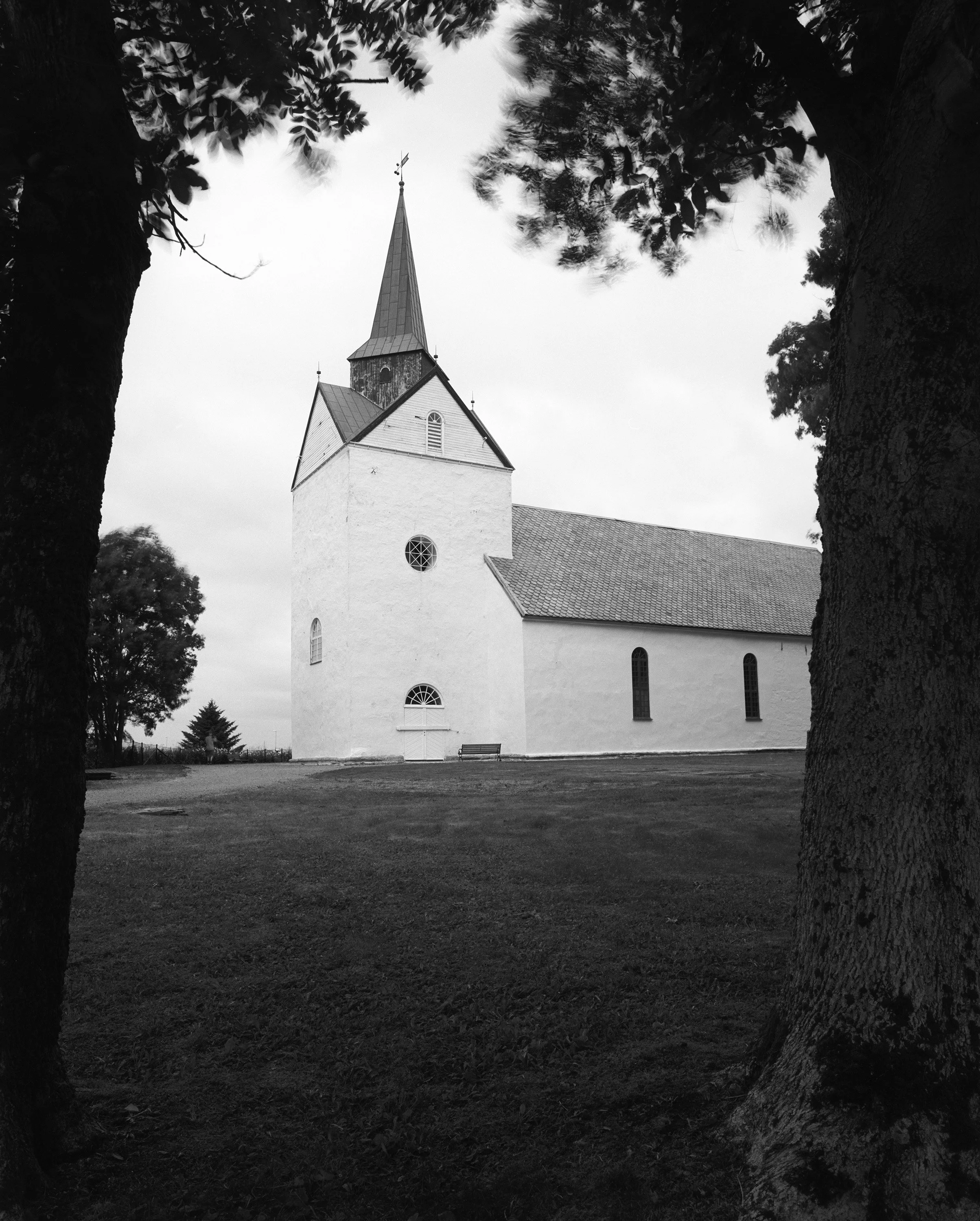
Herøy, Nordland, Norway. Exposed on Ilford Pan F Plus (120) at ISO 50 with a 2-second exposure. Reciprocity failure at this duration requires modest compensation to maintain tonal accuracy, particularly in the shadow region. Developed in Kodak Xtol. Camera: Mamiya RZ67 Pro II. Photo: Bjørn Joachimsen.
The relationship between negative and print is fundamental to black-and-white photography, and it is particularly critical when working with PAN F+.
Variable contrast paper allows the contrast of the final print to be adjusted through filtration during printing, primarily affecting the midtone region. This provides flexibility in interpreting the negative, allowing tonal relationships to be refined within the printable range.
However, this flexibility is limited to redistribution, not reconstruction. Multigrade paper cannot recover tonal information that is not present in the negative. If shadow values fall below the toe and are not recorded, they cannot be retrieved. Likewise, if highlights are overdeveloped and compressed into high density, they may exceed the paper’s ability to differentiate tones, resulting in featureless areas.
For PAN F+, this limitation is particularly important. The short toe requires deliberate exposure to secure shadow detail, while the restrained shoulder requires controlled development to prevent excessive highlight density. The negative must therefore be produced with the final print in mind.
Multigrade paper allows interpretation, but not correction. The quality of the print is fundamentally determined by the quality of the negative.
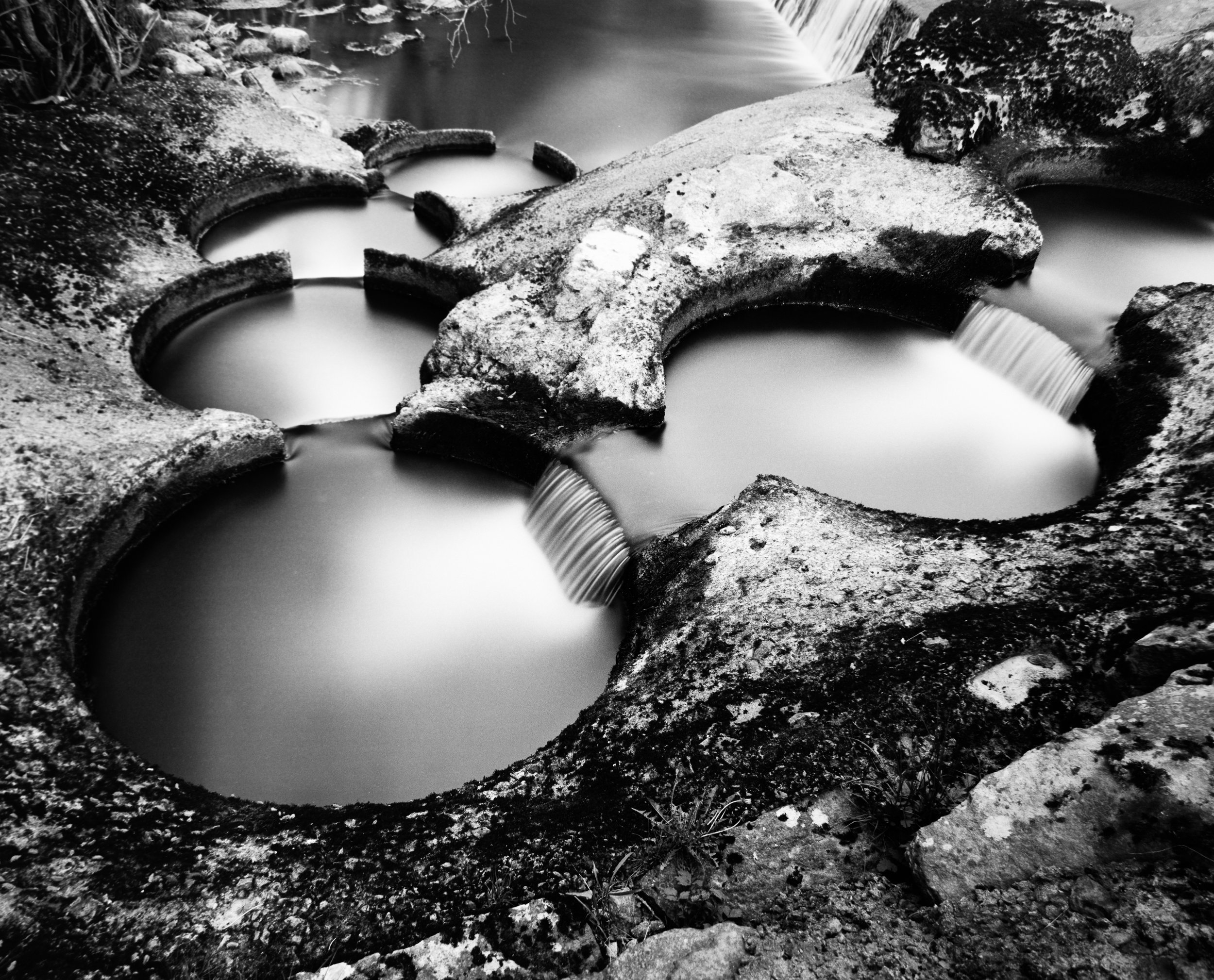
Tønsberg, Norway. Salmon ladder photographed after sunset. Captured on Ilford Pan F Plus (120 format) using a Mamiya RZ67 Pro II with Sekor 50mm f/4.5 set at f/16. No filter was used. Incident light metering indicated an exposure of 2 minutes 20 seconds, which was extended to 12 minutes to compensate for reciprocity failure. The extended exposure transforms the flowing water into smooth tonal surfaces, contrasting with the sharply defined concrete structure. PAN F+’s higher midtone contrast enhances tonal separation within the textured surfaces, reinforcing the physical character of the subject. Developed in Adox FX-39 II for 5 minutes at 20°C. Photo: Bjørn Joachimsen.
Long exposures require compensation
Like all photographic films, Ilford Pan F Plus exhibits reciprocity failure at longer exposure times. In practical terms, this means that the film does not respond proportionally to light during long exposures: doubling the exposure time does not result in a corresponding increase in density. Additional exposure—beyond what the light meter indicates—is therefore required to achieve correct tonal placement.
According to Ilford Photo, compensation becomes necessary from approximately one second onwards, with increasing deviation as exposure time lengthens. Compared with many other black-and-white films, PAN F+ exhibits a more pronounced degree of reciprocity failure, meaning that exposure corrections must be applied more aggressively, particularly as exposure times extend beyond a few seconds.
This behaviour affects not only exposure, but also the relationship between exposure and density. As exposure times increase, the linearity of the characteristic curve is altered, which can influence both contrast and tonal distribution across the negative.
For PAN F+, this must be considered carefully. The film’s limited tolerance in both the shadow (toe) and highlight (shoulder) regions means that insufficient compensation can lead to loss of shadow detail, while excessive exposure may result in overly dense highlights and reduced tonal separation. In practical long exposure work—such as coastal landscapes, moving water, low-light scenes or architectural interiors—reciprocity compensation should therefore be treated as an integral part of the exposure calculation rather than a secondary adjustment.
In some situations, slight reductions in development may also be beneficial in order to restrain highlight density and maintain a printable tonal range.
Reciprocity Failure Compensation – Ilford Pan F+
| Metered Exposure | Corrected Exposure |
|---|---|
| 1 s | 1 s |
| 2 s | 3 s |
| 4 s | 6 s |
| 8 s | 16 s |
| 10 s | 21 s |
| 20 s | 54 s |
| 30 s | 92 s |
| 60 s | 232 s |
Exposure compensation values are calculated using Ilford Photo’s official reciprocity formula for Pan F+: Tc = Tm1.33
PAN F+ exhibits progressively increasing reciprocity failure. The required correction follows a non-linear curve and should be treated as approximate unless derived directly from Ilford Photo’s published data.
Ilford Photo Film Reciprocity Failure Compensation Information (downloadable PDF)
A Final Perspective
PAN F+ in large format demands precision, but offers exceptional control. Its higher midtone contrast produces greater tonal separation and more clearly defined textures than more forgiving emulsions.
When exposure and development are matched deliberately to the subject, the film delivers a rendering of tone, structure and material that is both precise and expressive.For large format photographers, PAN F+ rewards precision in exposure, discipline in development, and clarity of intent. It translates subtle differences in tone into structure, and structure into form.
In large format, this is not a limitation, but an opportunity—to work deliberately, and to shape the image at the level of the negative itself.
For those willing to engage with that process, PAN F+ offers not just results, but a way of seeing.
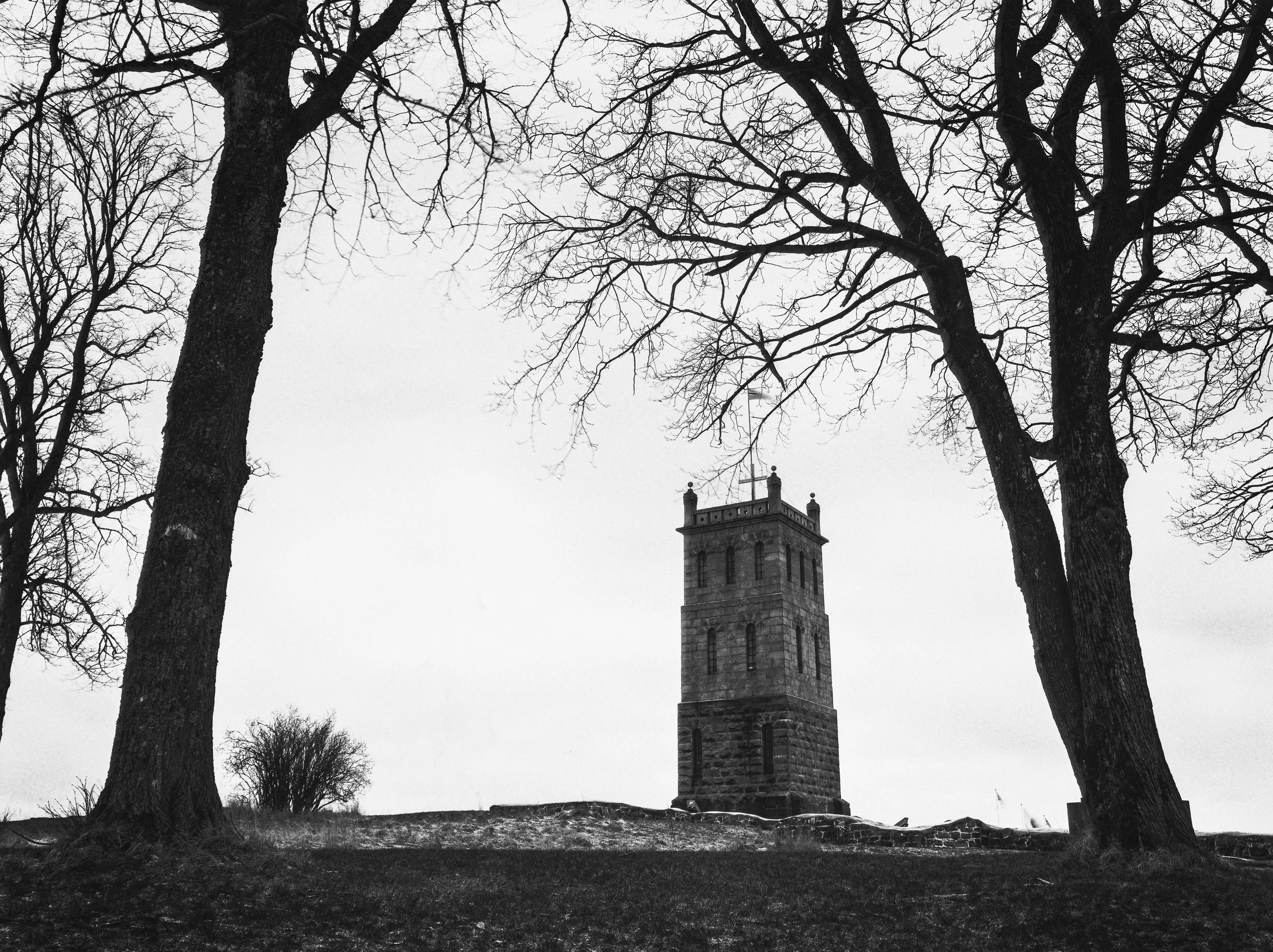
Tønsberg, Norway. Photographed on Ilford Pan F Plus (120 format) at ISO 50 with a Fuji GSW680III. Developed in Ilford ID-11 according to Ilford Photo technical data. Exposure was determined using incident light metering for maximum precision. A reflected light reading would likely have produced a significantly darker exposure due to the bright sky, risking loss of shadow detail. With PAN F+, underexposure should be avoided, as loss of detail in the deepest tonal values is irreversible. Photo: Bjørn Joachimsen.
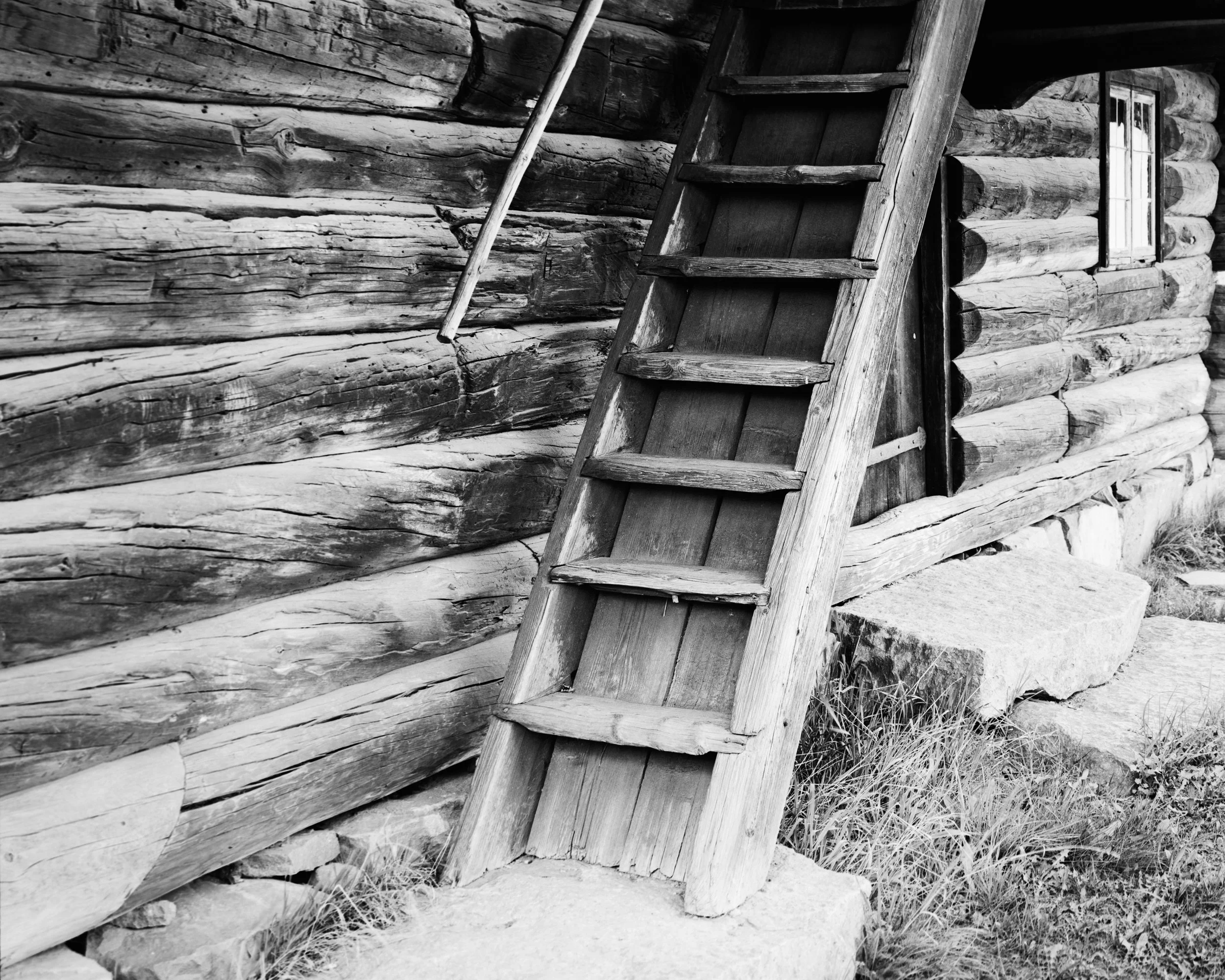
Tønsberg, Norway. Old timber house in open shade. Exposed on Ilford Pan F Plus (120) with a Mamiya RZ67 Pro II and Sekor 110mm f/2.8 at f/16. Diffuse light enhances tonal detail and surface texture. Developed in Adox FX-39 II (5 minutes at 20°C). Photo: Bjørn Joachimsen.